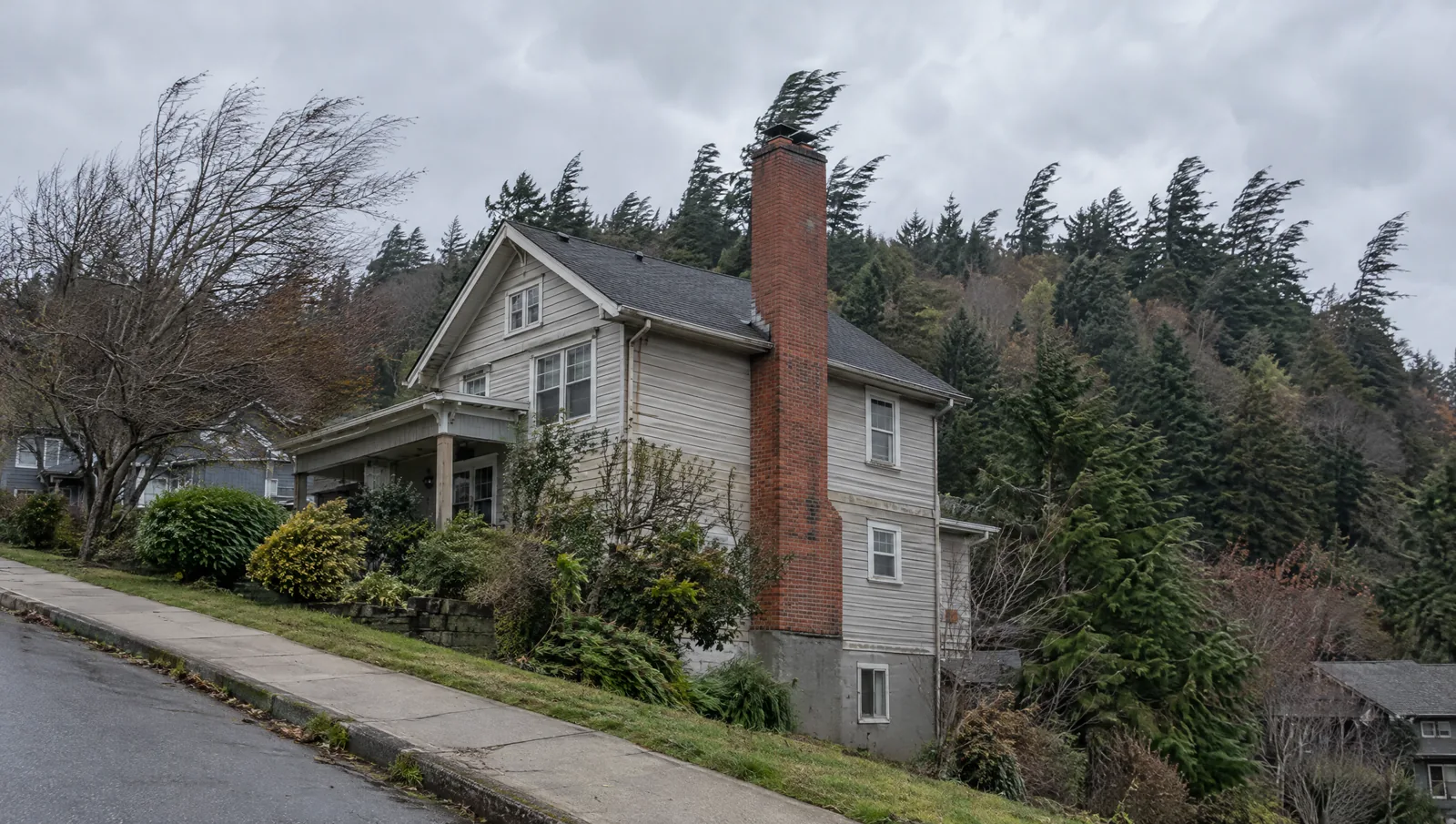
A chimney on a West Orange hillside works harder than one in a sheltered valley. It catches more wind, takes rain at an angle and can sit in ice and snow longer on a north-facing slope. The result is faster wear on the weather side of the masonry, the crown and the flashing. Most of that wear can be caught early with a yearly look, and the bigger repairs have a clear path through the township's building department.
What the terrain does to a chimney
West Orange covers about twelve square miles and climbs from the low ground near the Newark Bay basin up onto the First and Second Watchung Mountains. The township's recorded elevation is about 512 feet, and many streets rise along the steep face of the First Mountain. South Mountain Reservation runs along the southwestern side and Eagle Rock Reservation along the northeast.
The state climatologist's office notes that in northern New Jersey, prevailing winds come from the northwest in winter and the southwest in summer. A chimney standing high on a slope, with little in front of it, takes that wind full on. Winter storms, including nor'easters, can bring snow, sleet and freezing rain with strong wind. On a hillside chimney, that means:
- Wind-driven rain pushed into mortar joints and brick on the exposed face, so one side of the chimney often looks far older than the others.
- Snow and ice packed on the uphill side, where the roof meets the chimney. Meltwater runs straight at the flashing joint.
- Uneven drying. A shaded face on a north slope stays damp longer, and damp masonry is what cracks when it freezes.
- Downdraft. Wind rolling over the ridge or a neighboring roof can push smoke back down a chimney that is too short for its spot.
The housing on the hill
West Orange's housing spans a long stretch of history. The downtown and the Valley are the oldest and most densely built areas. Up on the First Mountain there are Victorian, Jazz Age and Tudor-style houses, larger estates and post-war homes, including Llewellyn Park, an enclave laid out in the 1850s and often called the first planned community in America. Pleasant Valley and Pleasantdale are mostly post-war neighborhoods with pockets of older Victorian homes.
Older masonry chimneys on these houses were usually built with softer, lime-rich mortar, and some have tall, decorative stacks with corbels and multiple flues. They can last a very long time if they are kept dry, but they need repairs done with materials that match. Post-war chimneys are often simpler and shorter, which can make them more prone to draft trouble on a windy slope.
Where to look after a hard winter
- The crown. Cracks and missing chunks let water straight into the chimney.
- The cap. Wind loosens fasteners and bends mesh. A tilted cap is a sign it needs attention.
- The uphill flashing. On a sloped roof, a cricket, which is a small peaked diversion behind a wide chimney, keeps snow and water from piling against it. Our chimney flashing repair page explains how flashing and crickets work together.
- The weather face. Compare the exposed side with the sheltered side. Recessed mortar, flaking brick or white staining on one face tells you which way the weather comes from.
- Inside the house. Stains on the ceiling or wall beside the chimney after a storm mean water has already found a way in.
Permits and the township building department
West Orange's Building, Construction and Code Enforcement department enforces the New Jersey Uniform Construction Code, found at N.J.A.C. 5:23, along with the township's own ordinances. It handles building, electrical, plumbing and fire applications. For some kinds of work, zoning approval is needed before a permit is issued.
A few points from the department's own guidance are useful to know before any larger chimney project:
- Permit applications and guidelines are available through the department's document center.
- Inspection requests are made through an online request form, not by phone, and you need the permit number when you ask.
- A copy of the permit has to be displayed at the work site, and approved plans kept there.
- Every required rough and final inspection has to be called for. The township warns that skipping them can lead to penalties.
Whether a particular job needs a permit is the department's call, not ours. As a practical rule, ask the township before a rebuild, a new liner for a heating appliance, a new fireplace or any change to the chimney's structure. Routine sweeping is ordinary upkeep. For anything in between, a call to the department settles it. Our chimney rebuild page explains when rebuilding the top of a weathered chimney makes more sense than patching it.
Keeping an exposed chimney sound
The best protection on a hillside is a dry chimney: a crown that sheds water past the brick, a solid cap, tight flashing with a cricket where needed, and mortar joints repointed before they open up. A yearly inspection catches the weather damage while it is still small. A Level 1 inspection is free, and a Level 2 inspection with a camera survey of the flue is $350.
For chimney care in town, visit our West Orange chimney sweep page or call (973) 786-9077.
Is your chimney taking a beating up the hill?
We will check the exposed sides, the crown and the flashing, and tell you what it needs. The estimate is free.
Chimney sweep in West Orange Get a Free EstimateMore reading: freeze-thaw damage in winter · chimney rebuild or repair