
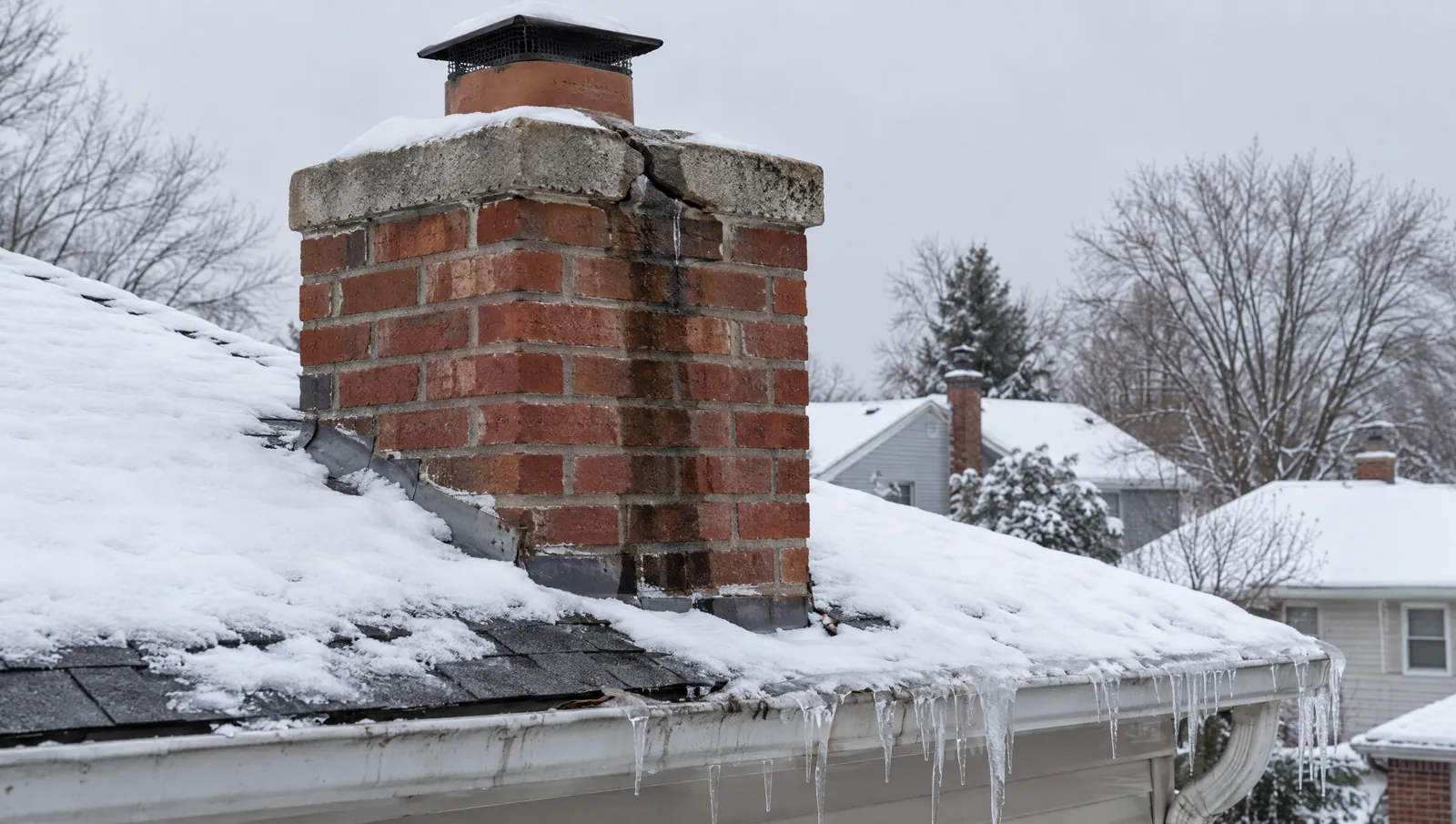
Freeze-thaw damage happens when water soaks into a chimney, freezes, expands and then thaws again. Each round opens cracks a little wider. In Verona, winter weather moves back and forth across the freezing point for weeks at a time, so a chimney that takes on water in November can look noticeably worse by March. The good news is that the damage starts at a few predictable spots, and most of them can be sealed before the cold sets in.
Why Verona winters are hard on masonry
Verona sits in a valley between the First and Second Watchung Mountains, with the Peckman River running along the low ground. The township is about 335 feet above sea level. Its January averages tell the story for chimneys. The typical daily high is around 36°F and the typical overnight low is around 19°F. That means a normal winter day can drip and melt in the afternoon and lock solid again after dark.
Brick, mortar and concrete all hold some water. When that water freezes it takes up more room than it did as liquid, and it pushes on whatever is around it. One cycle does almost nothing. Dozens of cycles every winter, year after year, will crack a crown, loosen mortar and pop the faces off bricks.
Age adds to it. Verona's population more than doubled between 1920 and 1930 and grew again in the 1950s, so plenty of local chimneys have already been through many decades of winters. Mortar and crowns from those building waves may have been patched before, sometimes with materials that do not match the original.
Where the damage shows up first
Freeze-thaw damage almost always starts at the top of the chimney, because that is where rain and melting snow sit longest. Look for these, in roughly this order:
- The crown. This is the concrete or mortar slab around the flue at the very top. Hairline cracks let water straight into the masonry below. Once a crack freezes a few times, chunks start to break off.
- Mortar joints near the top. Joints in the upper courses go sandy and recessed first. You may see gaps where you could slide a coin in.
- Brick faces. When water trapped behind the surface freezes, the face of the brick flakes or pops off. This is called spalling, and it often leaves red chips on the roof or in the gutter.
- The flue tile. Water that gets past a missing cap can crack clay flue tiles from the inside, which you cannot see from the ground.
- Flashing seals. Ice and meltwater work at the sealant where the chimney meets the roof, and a leak can show on a ceiling after a thaw.
A simple fall-to-spring plan
The cheapest time to deal with freeze-thaw damage is before the first hard frost. Here is a sensible order of work for a Verona home:
- Early fall: get eyes on the top of the chimney. A sweep and basic inspection will show the condition of the crown, the cap and the upper mortar. A Level 1 inspection is free with us.
- Before the first frost: seal the entry points. Fill crown cracks with a proper crown sealer or rebuild a crown that is breaking apart. Replace a rusted or missing cap so rain cannot fall straight down the flue.
- Midwinter: watch, do not climb. From the ground, look for new chips in the gutters, white staining on the brick or water marks near the chimney inside. Note the dates. Do not go on an icy roof.
- After the last frost: repair what the winter opened. Repointing and brick replacement need mild, dry weather so new mortar can cure. Spring is the natural time for that work.
Repairs that actually stop the cycle
The goal is to keep water out of the masonry, because without water there is nothing to freeze. A few repairs do most of the work:
A sound crown with an overhang. A well-built crown slopes away from the flue and sheds water past the face of the brick. A thin mortar cap that sits flush with the brick tends to crack early.
A cap with a lid and mesh. It keeps rain, snow and animals out of the flue. It is one of the simplest fixes on the whole system.
Repointing with the right mortar. Worn joints are ground out and refilled. On older brick, the new mortar should be softer than the brick so it gives first. Mortar that is too hard can push the damage into the brick itself. Our chimney masonry repair page explains how that work is done.
A breathable water repellent. Once the masonry is sound, a vapor-permeable repellent helps the brick shed rain while still letting trapped moisture dry out. A sealer that traps moisture can make spalling worse, so the product matters.
When freeze-thaw damage has gone too far
If a chimney has many loose bricks above the roof, leans, or has mortar that crumbles across most of the upper section, patching each joint stops making sense. At that point the top of the chimney is usually taken down to sound masonry and relaid. It sounds like a big job, but it is often limited to the part above the roofline.
If you live in Verona and are not sure how your chimney came through last winter, start with a look at the crown and cap before the weather turns. You can read more about how we handle chimneys in town on our Verona chimney sweep page, or call (973) 786-9077.
Want the chimney checked before winter?
We will look at the crown, the cap and the mortar and tell you what needs attention. The estimate is free.
Chimney sweep in Verona Get a Free EstimateMore reading: what spalling brick means · weather exposure on hillside chimneys