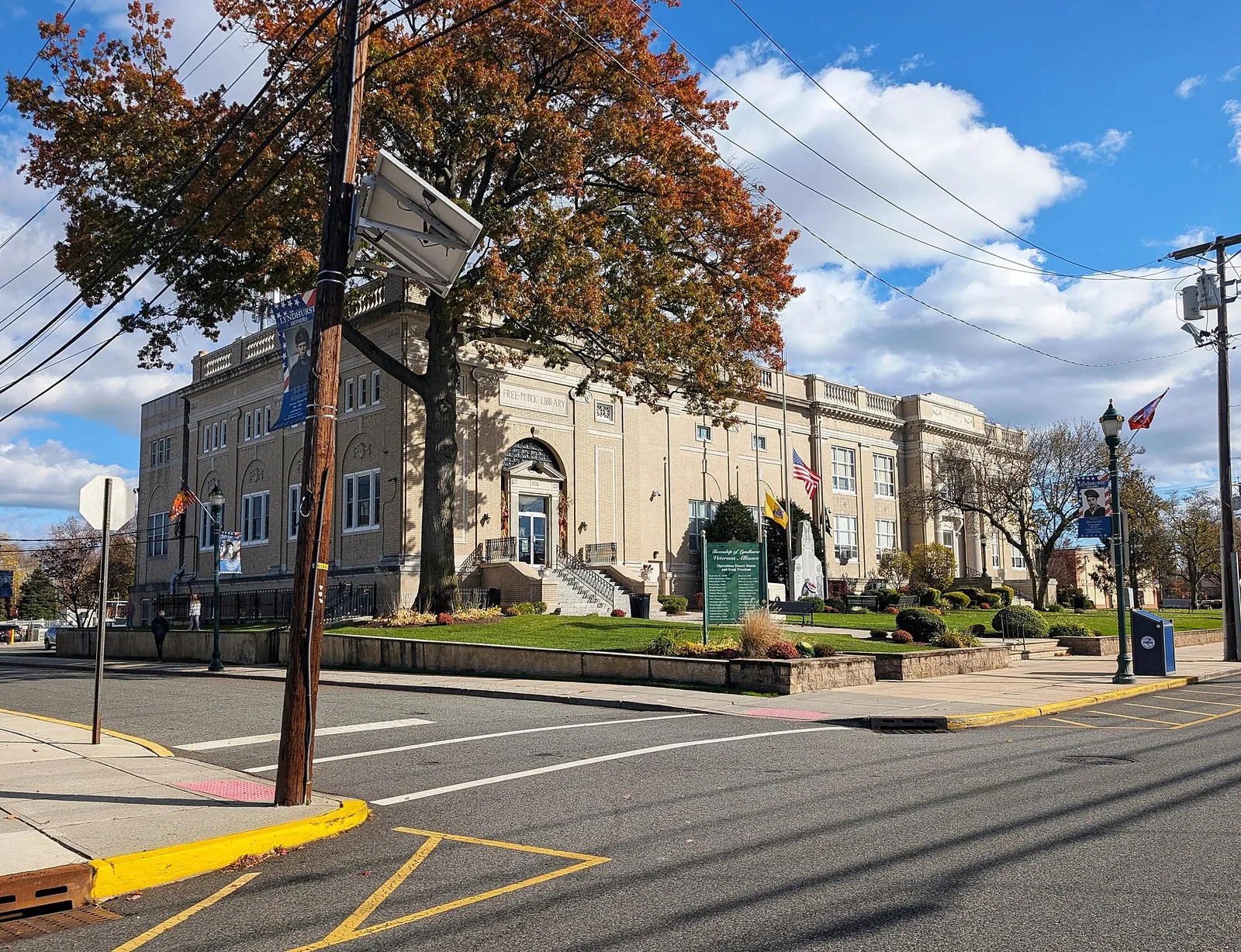
Lyndhurst Town Hall, seen from Valley Brook Avenue at Pine Street

Chimney Sweep in Lyndhurst, NJ

Sweeping and masonry care for Lyndhurst chimneys that spend the year in damp river air.

Photo: Lyndhurst Town Hall, seen from Valley Brook Avenue at Pine Street. Mr. Matté, CC BY-SA 4.0, via Wikimedia Commons.

Chimney care for Lyndhurst's older two-family homes

As a chimney sweep in Lyndhurst, NJ, we see a lot of white staining, soft mortar and two flues sharing one stack. The township sits between the Passaic River on the west and the Meadowlands wetlands on the east, and a large share of its houses went up before 1940, so moisture and age are the two things working on most chimneys here.

Two-family homes are common in town. Each floor may have its own boiler or water heater, and both can vent into the same chimney. On a visit we sweep the flues in use, figure out which appliance goes where, and tell you plainly what is wearing out first.

Get a Free Estimate

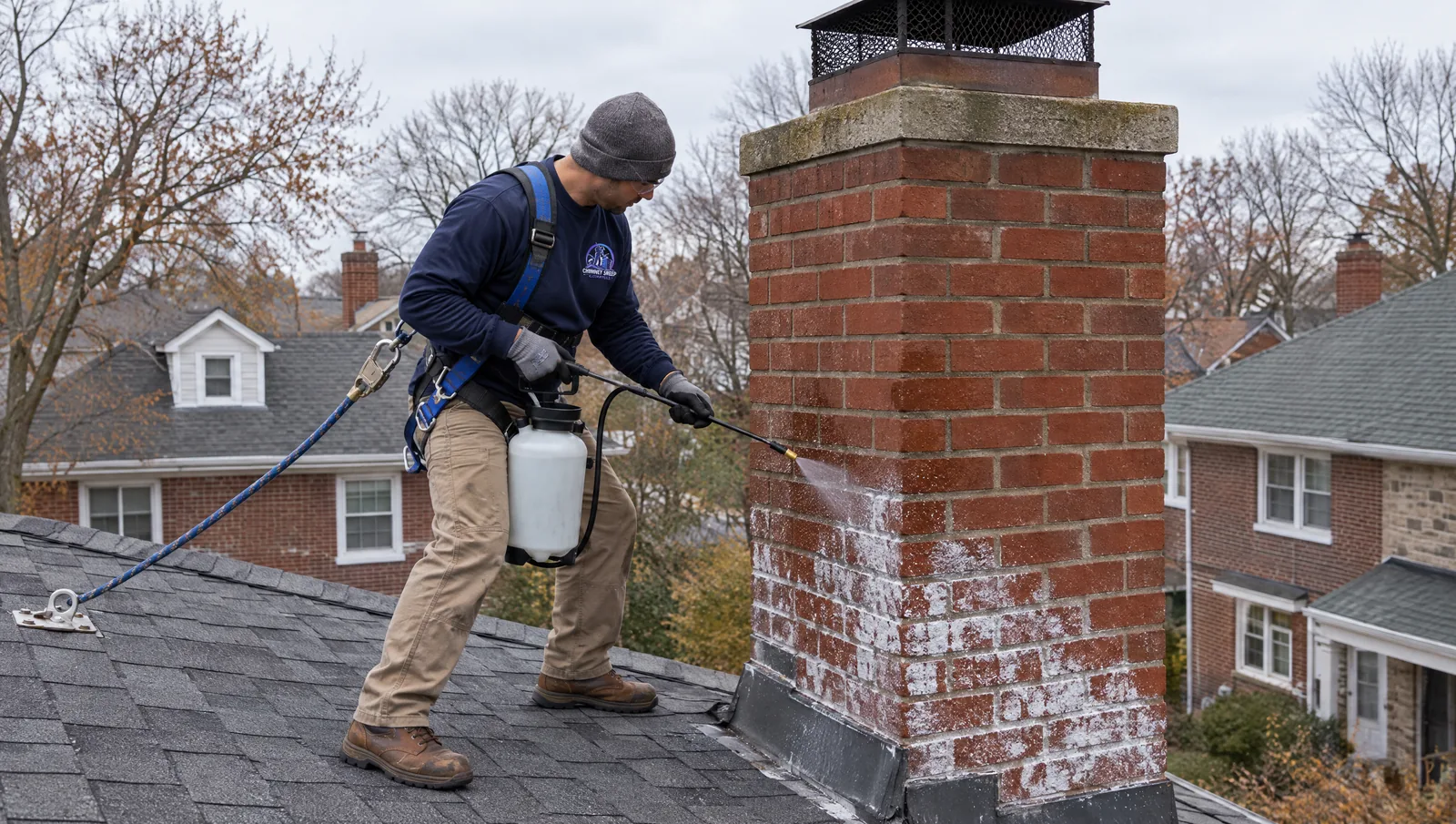
Technician spraying water repellent on a brick chimney with white salt stains
Illustrative photo of chimney repointing work.

Which problem do you see on your Lyndhurst chimney?

Choose the one closest to what is happening and the likely cause will open below it.

Our chimney services for Lyndhurst homes

Each service is offered throughout the township. This is where each one usually comes in.

Sweeping shared and single flues

Lyndhurst two-family houses often send two appliances up one chimney, each through its own flue. We sweep every flue that is in service, remove the debris that settles at the base and confirm that each appliance connects to the flue it should. Unused flues are noted so you know what you actually have, and which ones still need a cap.

Chimney sweeping in Bloomfield and nearby →

Caps, crowns and dampers

Damp air keeps a cracked crown wet for days after a storm, so small cracks on Lyndhurst chimneys grow faster than you might expect. We seal or rebuild the crown, install a cap with a screen to keep rain and animals out, and repair dampers that stick or leak air. Each fix is quick, and together they keep water out of the flue.

Chimney Repair →

Replacing cracked clay liners

Many Lyndhurst chimneys still rely on clay tile liners from when the house was built. Moisture and decades of heat cycles crack those tiles. We replace a damaged liner with stainless steel sized for the boiler, furnace or water heater, which keeps exhaust contained and protects the brick around it. We measure the flue first so the liner fits the appliance it serves.

Chimney Liner Replacement →

Mortar and brick that stay damp

White staining and crumbling joints are common on Lyndhurst chimneys because the brick rarely gets a long dry spell. We repoint the joints with a compatible mortar, swap out spalled bricks and, where it helps, apply a breathable water repellent that lets the masonry release moisture. The goal is a chimney that sheds rain and dries out between storms.

Chimney Masonry Repair →

Sealing the roof line

Flashing is where most Lyndhurst roof leaks around a chimney begin. Old tar patches crack and lift, and water slips behind them into the attic. We remove the patches, fit new step flashing under the shingles and counter flashing set into the brick, so the joint sheds water again. Then we check the attic side for wet wood.

Chimney Flashing Repair →

Inspections for sales and heating changes

Selling a Lyndhurst two-family, or swapping one unit's boiler, is the right time for a Level 2 inspection. We send a camera through each flue, check the connections for every appliance and hand you a written report with photos showing exactly what is inside. If a repair is needed, the report shows where and why, so nobody has to guess.

Level 2 Chimney Inspection →

Partial and full rebuilds

On older Lyndhurst houses a stack that has been wet for decades can reach the point where repairs no longer hold. We take it down to sound brick, rebuild with a close match to the original, and finish with a new crown and flashing so the chimney can handle the damp for years to come.

Chimney Rebuild →

Book Chimney Service in Lyndhurst

Damp air, rain and Lyndhurst chimneys

Lyndhurst has water on two sides. The Passaic River forms its western edge, and the eastern part of the township is Meadowlands wetland. About 8% of the township's area is water, which is part of why brick here so often looks damp and stained.

Rain is spread through the whole year. Nearby Hackensack averages about 3.21 inches in February, its driest month, and 4.60 inches in July, its wettest. In winter, storms often mix rain and ice. Masonry in Lyndhurst seldom gets a long stretch to dry, so salts move to the surface and frozen water slowly opens the mortar joints.

Lyndhurst houses and how their chimneys age

The Township of Lyndhurst keeps its town hall on Valley Brook Avenue, in a township that began as Union Township in 1852 and took the Lyndhurst name in 1917. Census survey data shows about 30% of homes were built before 1940 and about 18% in the 1950s, with a typical build year of 1956.

Two-family houses make up nearly 30% of homes, single-family detached houses about 42%, and roughly 60% of households own. In Kingsland, the railroad once built houses for its workers, and older homes along Riverside Avenue include the Van Winkle and Yeareance houses on the National Register. Masonry chimneys on houses this age often need liner and mortar work.

Where we are, and where we work

Our business addressBloomfield, NJ 07003

Our business is in Bloomfield, a short drive west, and we come out to Lyndhurst for each appointment. The map shows the township we cover, not a shop or office.

Lyndhurst chimney questions

What is the white powder on my Lyndhurst chimney?

It is efflorescence, mineral salt left behind as water evaporates from the brick. It is a sign of moisture moving through the masonry, so the real fix is stopping the water, not just scrubbing the stain.

In a Lyndhurst two-family house, who is responsible for the chimney?

Usually the owner of the building, since the chimney serves both units. We inspect every flue at once and explain which appliance uses which, so the owner can plan repairs for the whole stack.

Should I waterproof a brick chimney?

Only after the mortar and crown are repaired. A breathable repellent then slows water entry, but sealing over cracked joints traps moisture inside and can make spalling worse.

How long does a chimney liner replacement take?

Most stainless liner installs are finished in a day once the flue is measured and the parts are in hand. Larger or offset chimneys can take longer, and we tell you up front.

Book your Lyndhurst chimney visit

Phone us or fill in the form, and we will arrange a visit at a time that fits your week.

Get a Free Estimate (973) 786-9077