Level 2 Chimney Inspection in Bloomfield, NJ
A camera through the flue and a look at the attic and basement, for the times a basic check is not enough.
NFPA 211, the national standard for chimneys, fireplaces and vents, sets out three levels of inspection. A Level 1 is the basic yearly check of the parts you can reach. A Level 2 goes further, and it is the one called for when something about the chimney or the house is changing. A Level 2 chimney inspection in Bloomfield, NJ most often comes up when a house is being bought or sold, when a furnace or stove is replaced, or after a chimney fire.
This page explains what the inspection covers and when it is needed. The repairs it may point to have their own pages, from liner replacement to masonry repair, so you can read up on anything the findings mention.
When NFPA 211 calls for a Level 2 chimney inspection
- A sale or transfer of the property. The buyer gets a documented look inside the flue before closing.
- A change to the system. Switching fuel, relining the flue, or replacing an appliance with one of a different type, size or efficiency.
- After an event that could have caused damage. A chimney fire, a house fire, a lightning strike, a severe storm or an earthquake.
- When a Level 1 cannot answer the question. A stain, a smell or a draft problem with no visible cause.
What the inspection covers
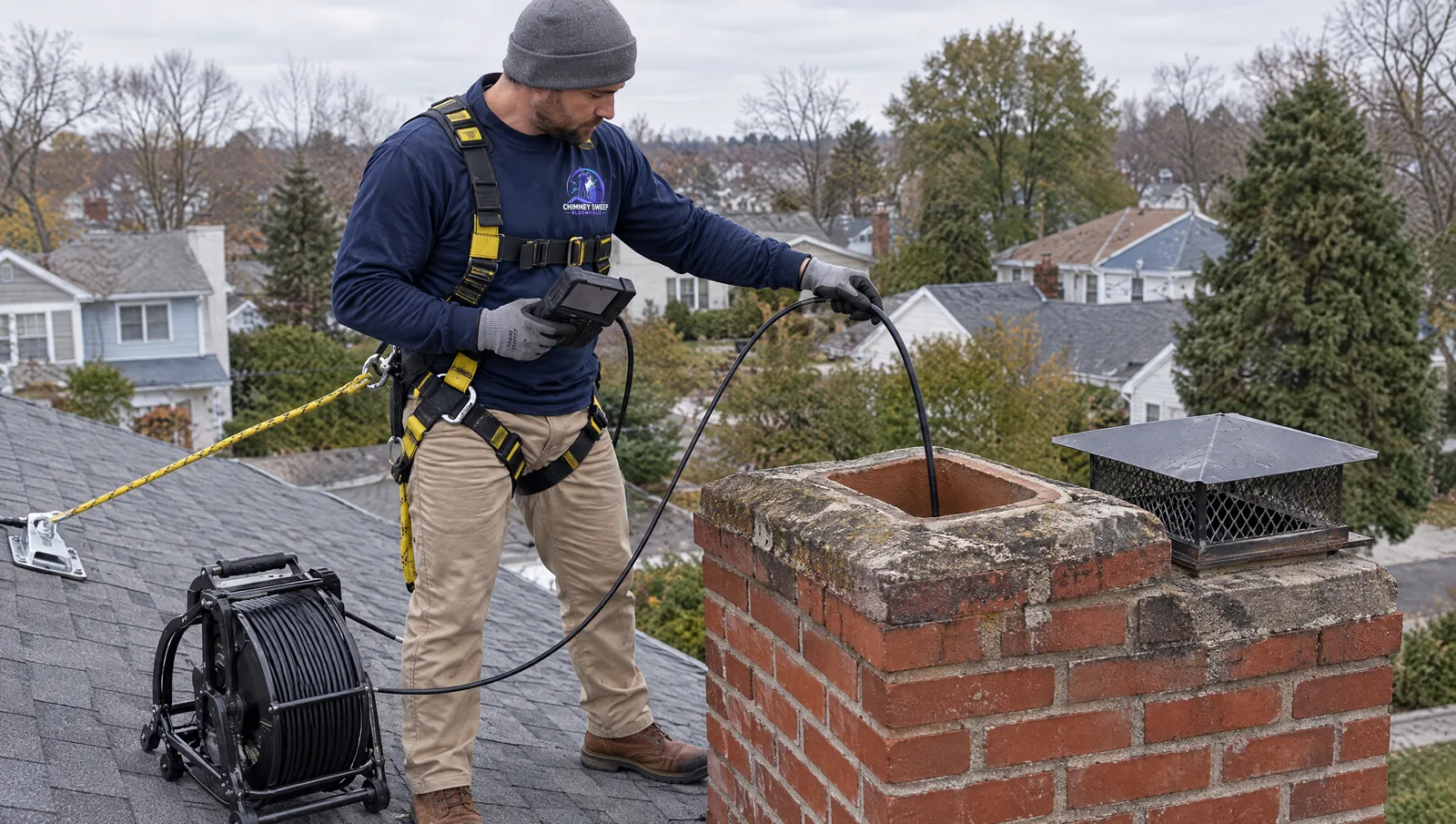
A Level 2 includes everything in a Level 1: the readily reachable parts of the chimney, the fireplace or appliance, the connector and the flue openings. It then adds the accessible parts of the attic, basement and crawl spaces the chimney passes through, a check of clearances from the chimney to wood framing and other combustibles where those can be seen, and the outside of the chimney from the roof.
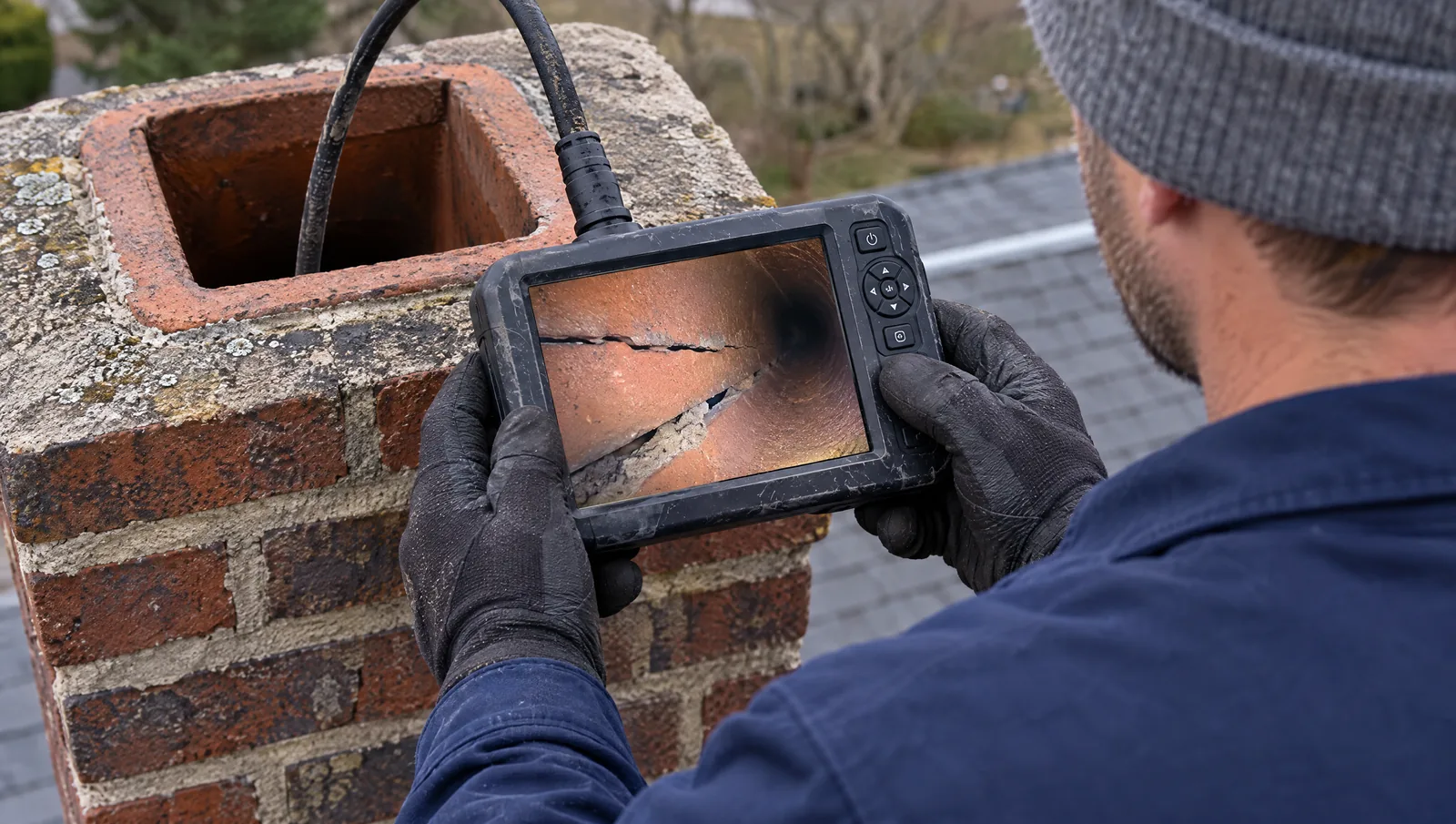
The key addition is a video scan of the whole flue. A camera is run from top to bottom so every liner joint and tile can be seen, including the sections hidden inside walls.
Why a camera finds what a flashlight misses
A flue can be thirty feet long with an offset or two, and most of it cannot be seen from either end. Cracked tiles, open mortar joints between liner sections, heat damage from an old chimney fire and creosote glaze all tend to sit in the middle of the run. A chimney fire can crack tiles in places that look fine from the firebox. The camera recording shows those spots in place, so there is no guessing about where the damage is.
How the inspection day goes
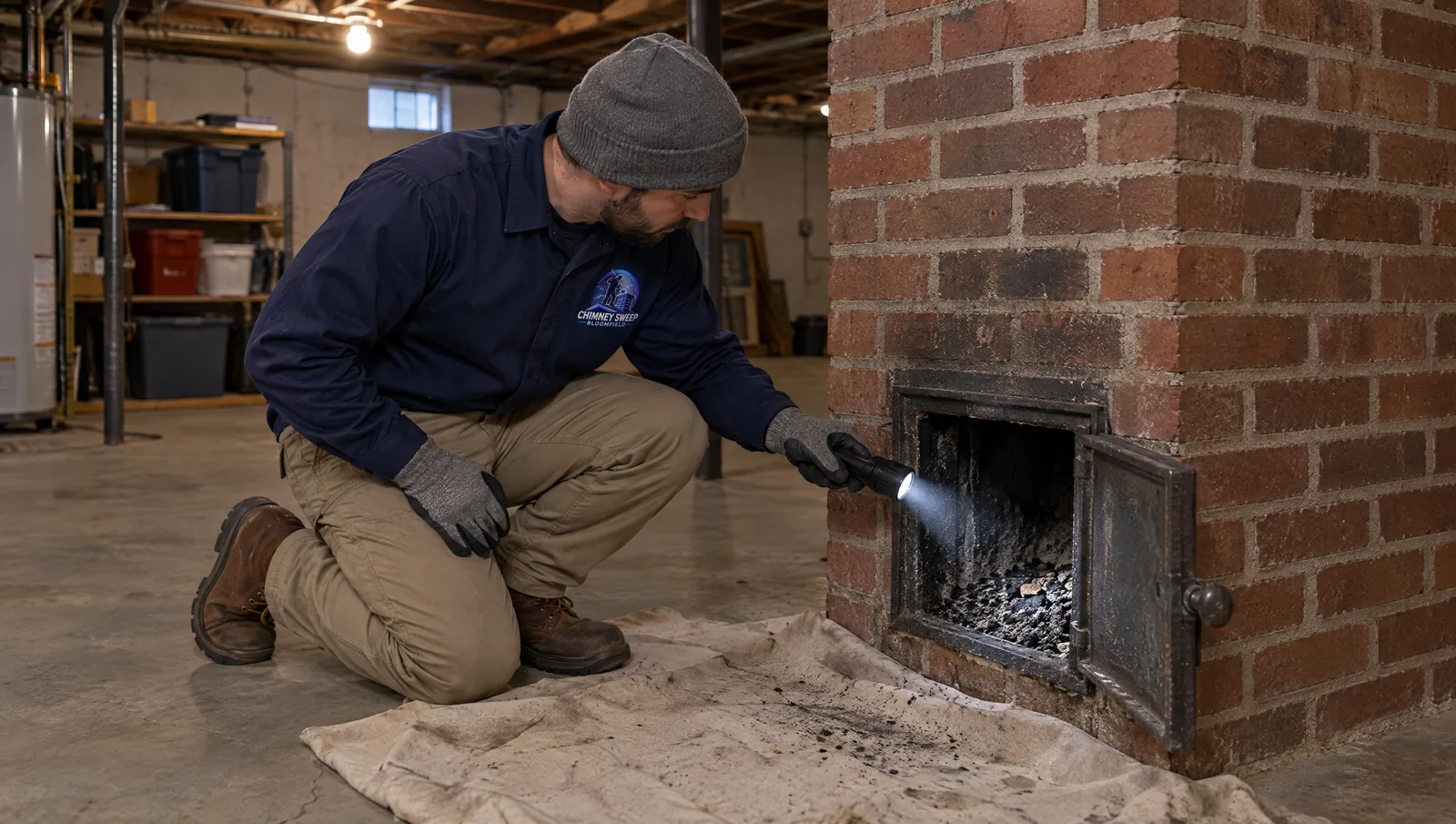
We protect the floor around the fireplace or appliance, then work from both ends of the flue. The camera goes down from the roof or up from the firebox, depending on the chimney. We check the attic and basement where the chimney is accessible and measure the flue against the appliances it serves. Nothing permanent is removed and no walls are opened. Afterward you get a written report with photos and stills from the video.
What happens with the findings
The report lists what was found and what we recommend, in order of importance. Some findings are simple, like a missing cap. Others, like a cracked flue, point to a new liner, and roof-line water damage may lead to flashing repair. If you are buying a home, you can share the report with your attorney or agent.
What affects the price of a Level 2
- How many flues the chimney has and how many appliances vent into it.
- The height of the chimney and how easily the roof can be reached.
- Whether the flue needs sweeping first so the camera can see the surface.
- How much of the attic and basement must be checked.
Call us for the current price of a Level 2 for your home.
Why the timing matters before you light a fire
After a chimney fire, the flue can look normal from below while tiles above are cracked and framing nearby has been scorched. Using the fireplace again before a Level 2 risks a second fire reaching the house. The same goes for a new furnace connected to a flue that has never been checked for size. A mismatch there can send carbon monoxide back into the home.
Level 2 inspection questions
What is the difference between a Level 1 and a Level 2 inspection?
A Level 1 checks the parts of the chimney you can readily reach. A Level 2 adds a camera scan of the whole flue plus the accessible attic, basement and crawl space areas around the chimney.
Do I need a Level 2 chimney inspection when buying a house?
NFPA 211 calls for one when a property is sold or transferred. It shows the buyer the condition inside the flue, which a home inspector's general walk-through does not cover.
Does a Level 2 inspection damage the chimney or walls?
No. A Level 2 does not remove permanent parts of the building or open walls. If a problem can only be reached by opening something up, that is a Level 3, and we would explain why first.
I replaced my oil burner with gas. Do I need a Level 2?
Yes, a change in fuel type is one of the standard triggers. The flue has to be checked to confirm its size and condition suit the new appliance before it is used.
Our other services
Areas we serve
We bring this service to Bloomfield and every town below.
Book a Level 2 chimney inspection
Buying, selling or changing an appliance? Call (973) 786-9077 or send us a note to schedule.