
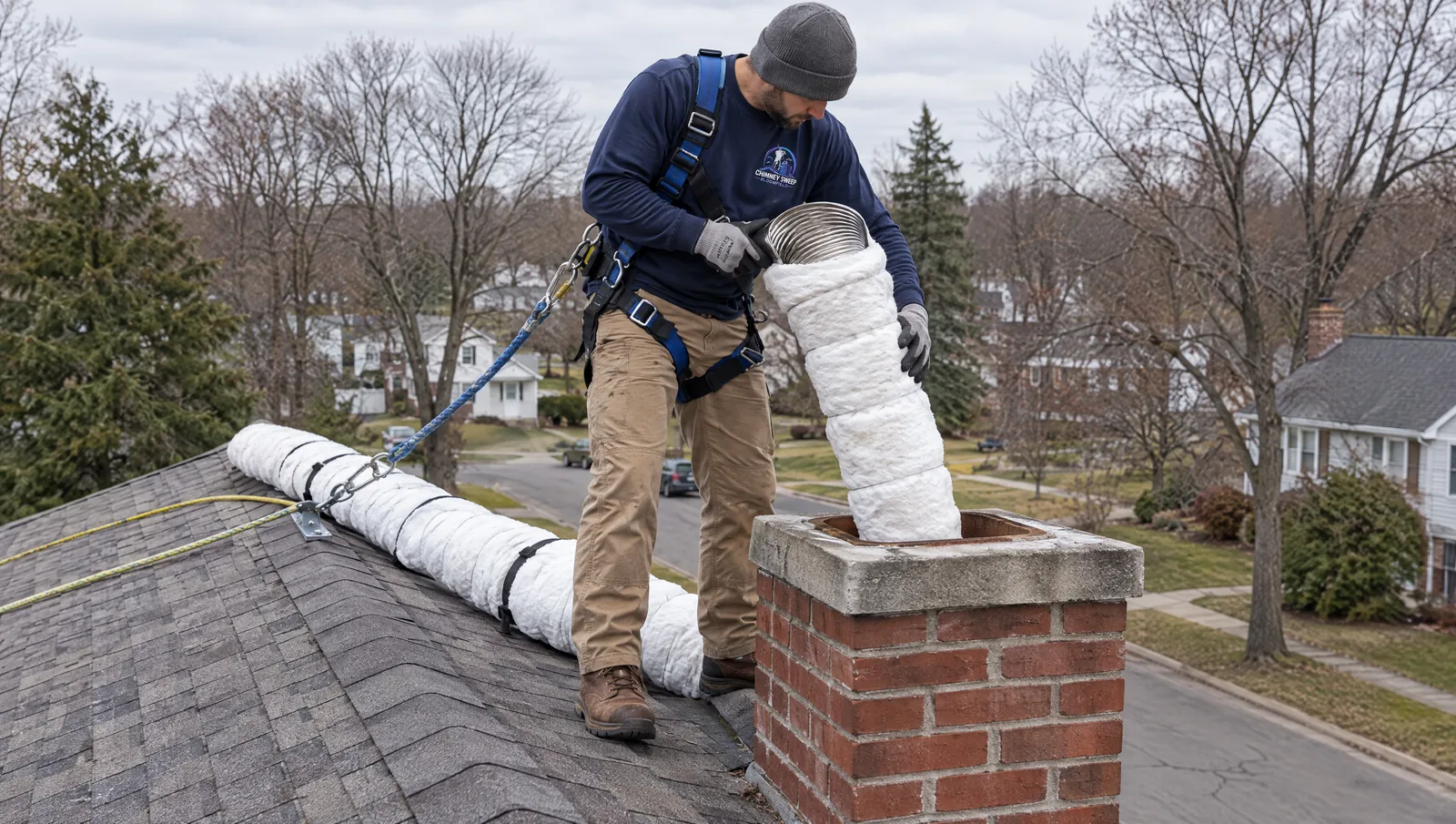
Chimney Liner Replacement in Bloomfield, NJ
Cracked clay tiles, a new furnace or a flue that drips inside. A liner sized for the appliance fixes it.
The liner is the pipe inside the chimney that carries smoke and exhaust out of the house. Chimney liner replacement in Bloomfield, NJ comes up most often in older brick homes, where the original clay tiles have cracked, shifted or lost the mortar between sections. It also comes up when a furnace or water heater is swapped for a newer model and the old flue no longer fits the new appliance.
This page is about the flue itself: what it is made of, how it is sized and how it is replaced. Problems with the brick outside belong to chimney masonry repair, and a cracked crown or broken damper is covered under chimney repair. We look at the flue before we recommend anything, and the estimate is free.
Signs the flue liner has failed
- Pieces of orange or tan clay tile in the firebox, the cleanout door or the base of the chimney.
- A sweep or camera finds open joints, cracked tiles or a gap where two tile sections meet.
- Water or rusty streaks at the base of a flue that serves a gas furnace or water heater.
- Stains or a damp patch on an inside wall next to the chimney, with no roof leak above it.
- A strong exhaust or soot smell in the basement when the furnace runs.
Why liners crack and wear out
Clay tile liners do not expand evenly. When a fireplace heats up fast, the inside face of a tile gets hot while the outside stays cool, and the tile can crack. A chimney fire does the same thing in minutes.
Gas appliances cause a slower kind of damage. Modern furnaces send cooler exhaust up the flue, and water vapor in that exhaust condenses on a cold, oversized clay flue. The water is mildly acidic, so it eats at the mortar joints and the tile surface year after year.
How we check a chimney liner
Most of a flue cannot be seen from the top or the bottom, so we run a camera through it. The video shows each tile joint, any cracks, any missing sections and any buildup that narrows the flue. We also measure the flue and note every appliance that vents into it.
When a liner problem shows up during a home sale or after a chimney fire, the full evaluation is a Level 2 chimney inspection.
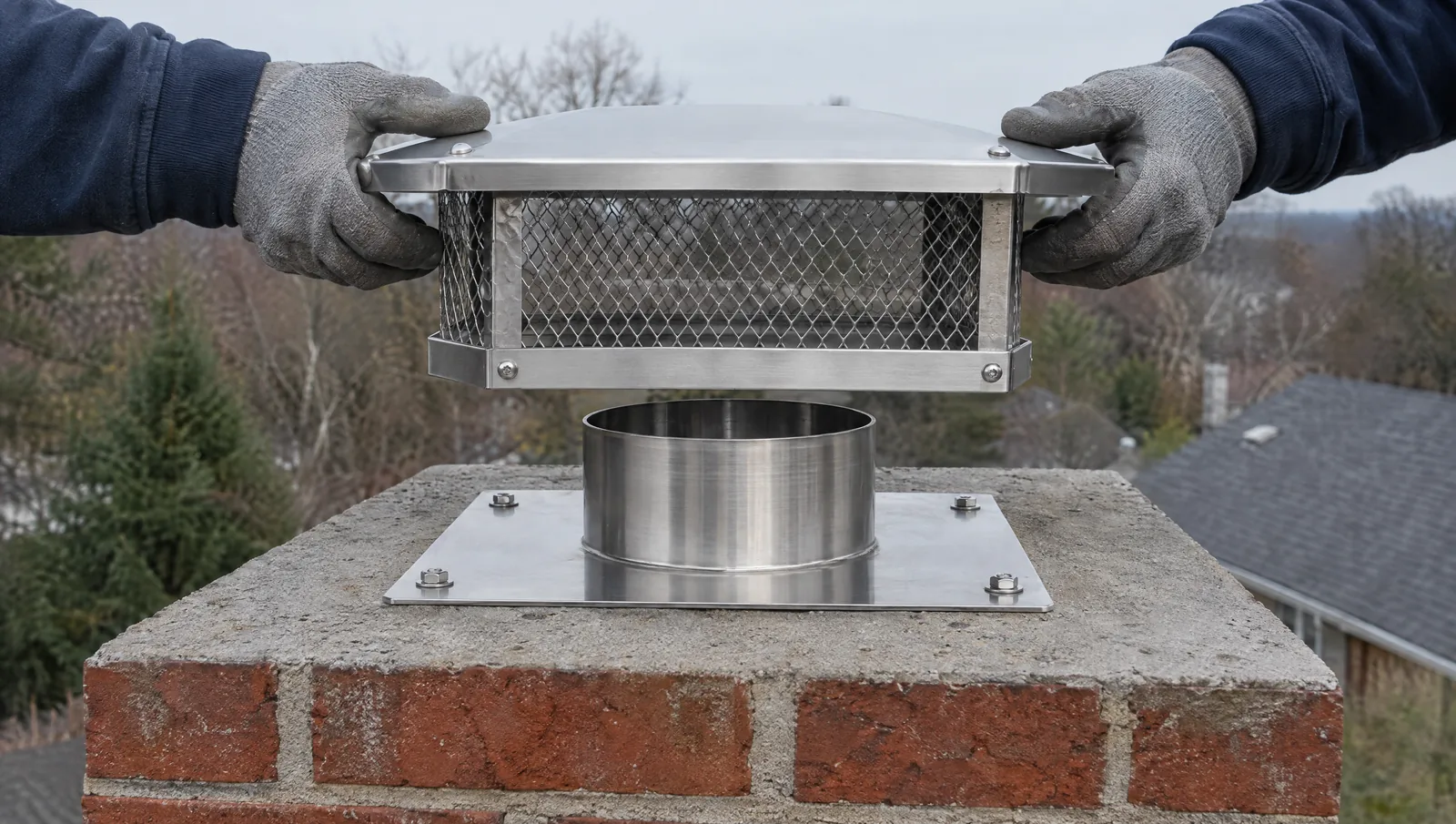
Chimney liner replacement options
Stainless steel liners are the most common choice. A flexible or rigid stainless pipe is lowered from the roof and connected to the appliance at the bottom. The alloy is matched to the fuel, since wood, oil and gas each leave different deposits. For wood and oil, the liner is usually wrapped in an insulation blanket or surrounded with a poured insulating mix, which keeps the flue warmer and adds clearance to nearby framing.
Cast-in-place liners are a cement mix poured around a form inside the old flue. They suit chimneys with odd shapes or several damaged tiles, and they add strength to old masonry.
New clay tile is possible, but it usually means opening the chimney, so it is more often part of a chimney rebuild.
When a liner can be repaired instead
A single cracked tile near the top of an otherwise sound flue can sometimes be replaced at the top. Small gaps in tile joints can be filled with a heat-rated resurfacing compound applied through the flue. That only works when the rest of the liner is in good shape and the flue is the right size for the appliance. If the camera shows damage along the length, a new liner is the honest answer.
What affects the price of a new liner
- The height of the chimney and the length of liner needed.
- The fuel and appliance, which decide the alloy, the diameter and whether insulation is required.
- Whether the old tiles must be broken out to fit the right size liner.
- How many flues in the chimney need work, and how easy the roof is to reach.
We price it after we have measured the flue and seen the appliance.
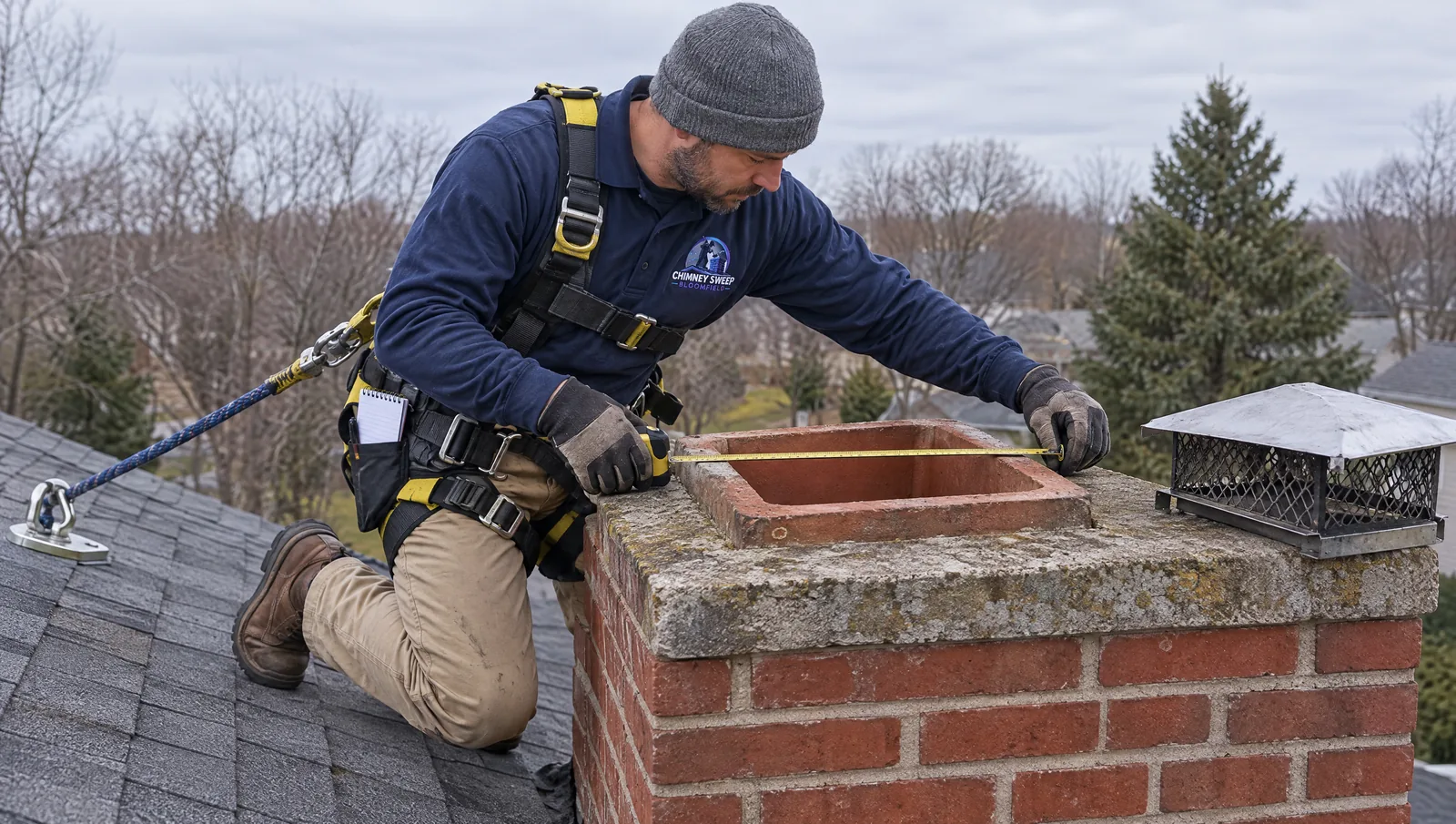
Why the right liner size matters
A flue that is too large for a furnace or water heater lets exhaust cool and drift, so it may not draft well and can spill carbon monoxide into the basement. A flue that is too small chokes a fireplace and pushes smoke into the room. The liner diameter is chosen from the appliance maker's venting instructions and the code tables, not by guessing.
What to expect on install day
Most liner work happens from the roof. We cover the hearth or the area around the appliance, clean the old flue, lower the new liner and connect it at the bottom. A cap goes on top to keep rain and animals out. Before we leave, we run the appliance and check that the flue is drawing.
Chimney liner questions
Do I need a new liner when I replace my gas furnace?
Often you do. A newer furnace sends cooler exhaust up the chimney, so the old clay flue may be too big and too cold for it, which leads to condensation and poor draft.
Which is better, stainless steel or cast-in-place?
It depends on the chimney. Stainless steel suits most single appliances and straight flues, while a cast-in-place liner can make sense for an irregular or badly damaged flue that also needs strengthening.
Can a fireplace and a furnace share one flue?
Generally no. A fireplace and a fuel-burning appliance each need their own flue, and the code does not allow a solid-fuel fireplace to share a flue with a furnace or boiler.
How long does a stainless steel liner last?
A stainless liner matched to its fuel and kept swept usually lasts many years. Using the wrong alloy for the fuel, or never cleaning it, shortens that life a great deal.
Our other services
Areas we serve
We bring this service to Bloomfield and every town below.
Ask about a new chimney liner
Tell us what the flue serves and what you have noticed, or call (973) 786-9077. The estimate is free.