
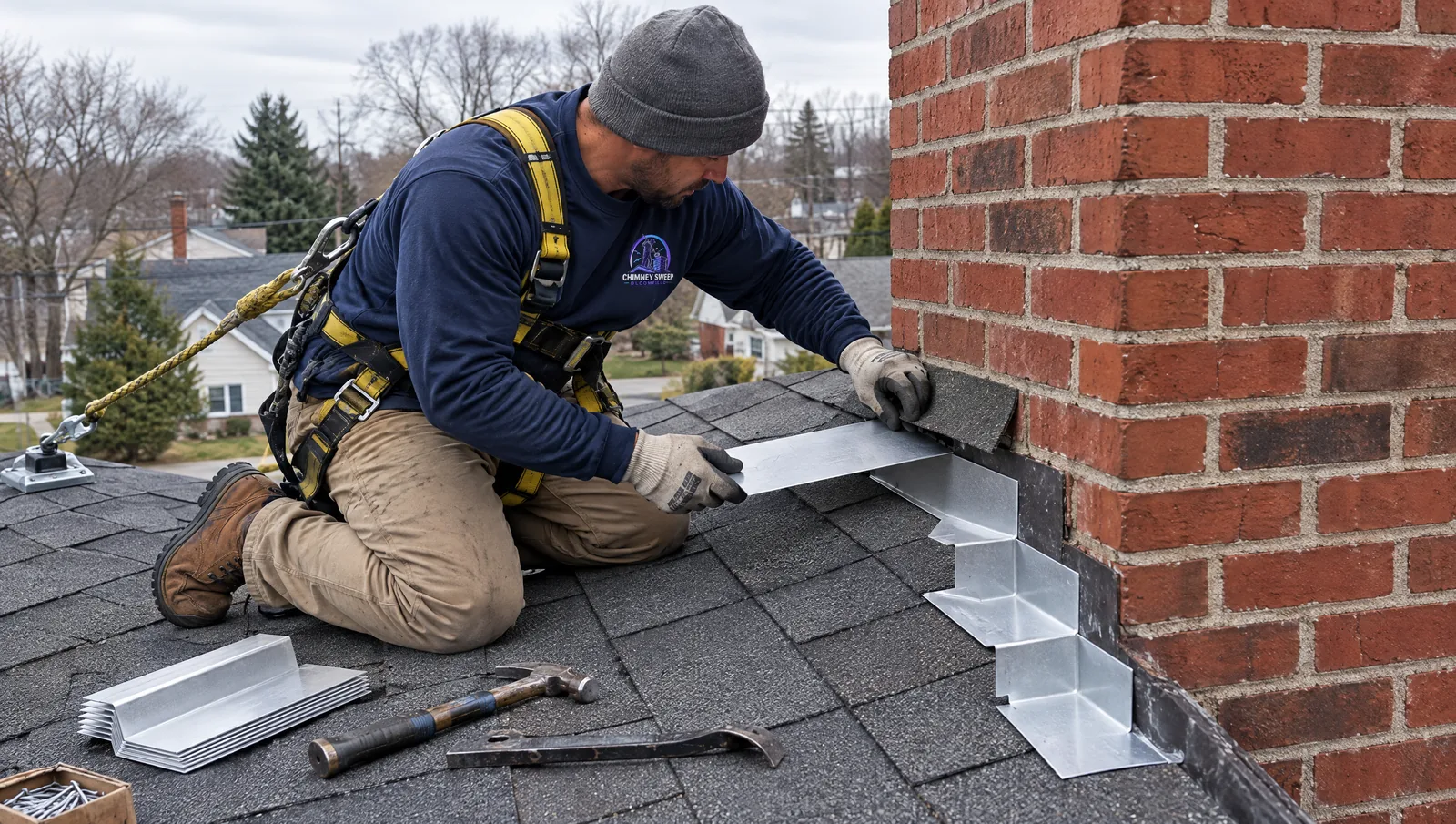
Chimney Flashing Repair in Bloomfield, NJ
Most chimney leaks start where brick meets shingles. That joint is what flashing is for.
A chimney and a roof move differently. The roof flexes with heat and wind, the brick does not, and the gap between them has to stay watertight for decades. Chimney flashing repair in Bloomfield, NJ is the work of sealing that gap with layered metal so rain runs over the joint instead of into it.
Flashing is a common cause of leaks, but it is not the only one. Water that comes through a cracked crown or an open cap is covered under chimney repair, and water soaking through worn joints in the brick is masonry repair. We find out which one it is before we price anything, and the estimate is free.
Signs the chimney flashing is leaking
- A water stain on the ceiling or upper wall right beside the chimney, often worse after wind-driven rain.
- Wet or darkened rafters and roof sheathing around the chimney in the attic.
- Thick roofing tar smeared along the base of the chimney, which usually means an earlier quick fix.
- Metal that is lifted, rusted, bent or pulled out of the mortar joints.
- Shingles near the chimney that are curled, soft or stained.
Why chimney flashing fails
Some flashing was never installed right. A single piece of metal bent against the brick and sealed with caulk will leak once the caulk dries out. Other flashing wears out with the roof. When shingles are replaced, the old metal is sometimes reused or just covered over.
The top edge of the flashing also depends on the mortar it is set into. When those joints wear, the counter flashing loosens and water gets behind it.
How we track down a roof-line leak
We start inside, where the stain is, then go to the attic to see how far the water has traveled along the framing. On the roof we check each side of the chimney: the apron at the bottom, the step flashing along the sides, the back of the chimney on the uphill side and the counter flashing tucked into the brick. The pattern of the stain and the wet wood usually points to one side.
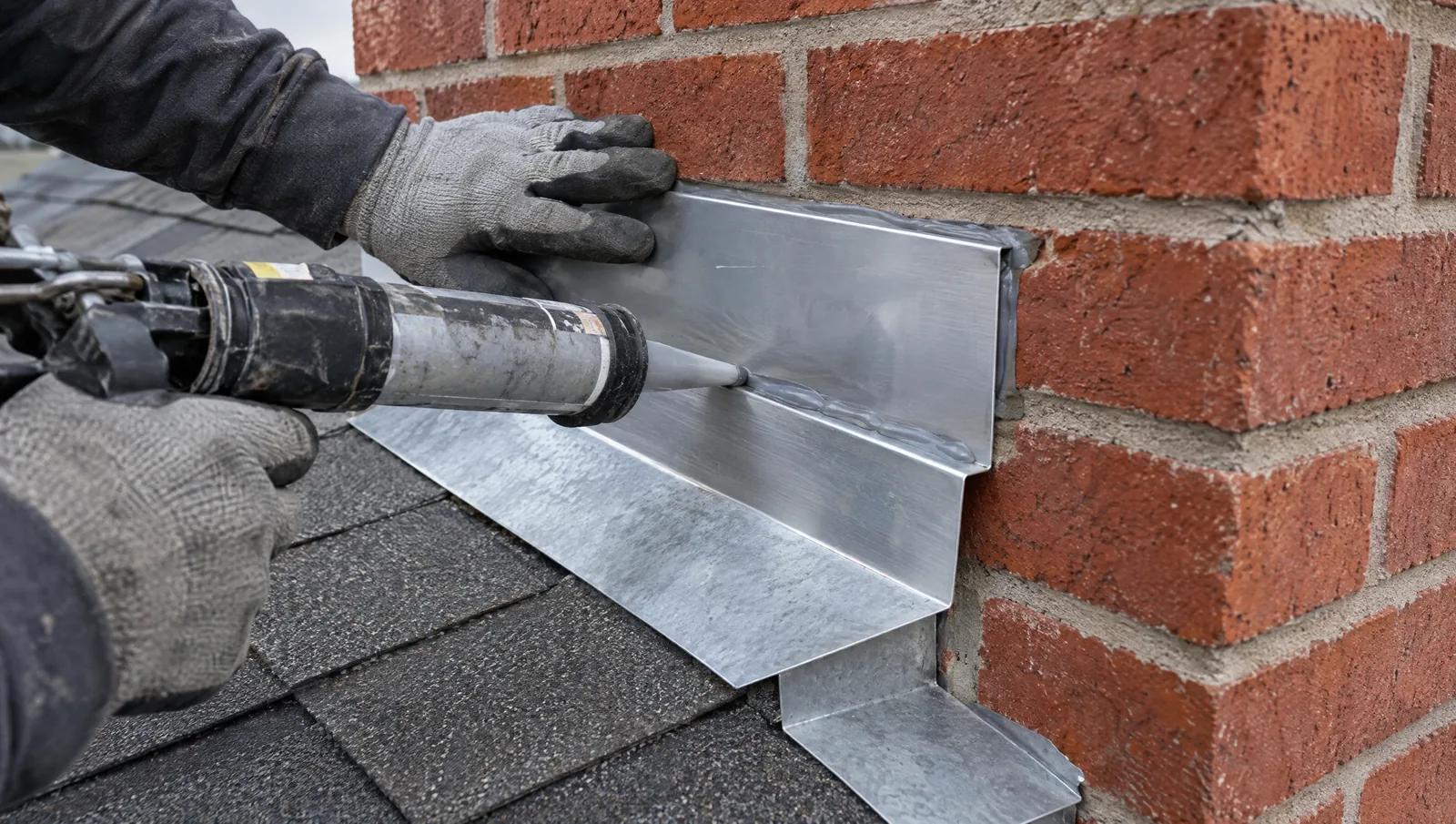
How proper chimney flashing is built
Good flashing is two layers. Step flashing is a series of L-shaped pieces woven in with each course of shingles along the sides, so each piece sheds water onto the shingle below. Counter flashing covers the top of the step flashing. Its edge is set into a slot, called a reglet, cut into a mortar joint, then sealed. An apron covers the downhill face of the chimney. The two layers are not fastened to each other, so the roof and the chimney can move without tearing the seal.
Crickets on wide chimneys
Water and snow pile up behind a wide chimney on the uphill side. A cricket, also called a saddle, is a small peaked roof built behind the chimney to split that water and send it around both sides. Building codes call for one when the chimney is more than 30 inches wide across the slope and does not sit on the ridge. If a wide chimney has been leaking from the back, a missing cricket is often why.
What decides the cost of flashing work
- Whether the old flashing can be resealed or must be torn out and replaced.
- The size of the chimney and whether a cricket needs to be built.
- The roofing material, its age, and how many shingles must be lifted and replaced.
- Any wet sheathing or framing that has to be dealt with first.
We give a price once we have seen both the roof and the attic.
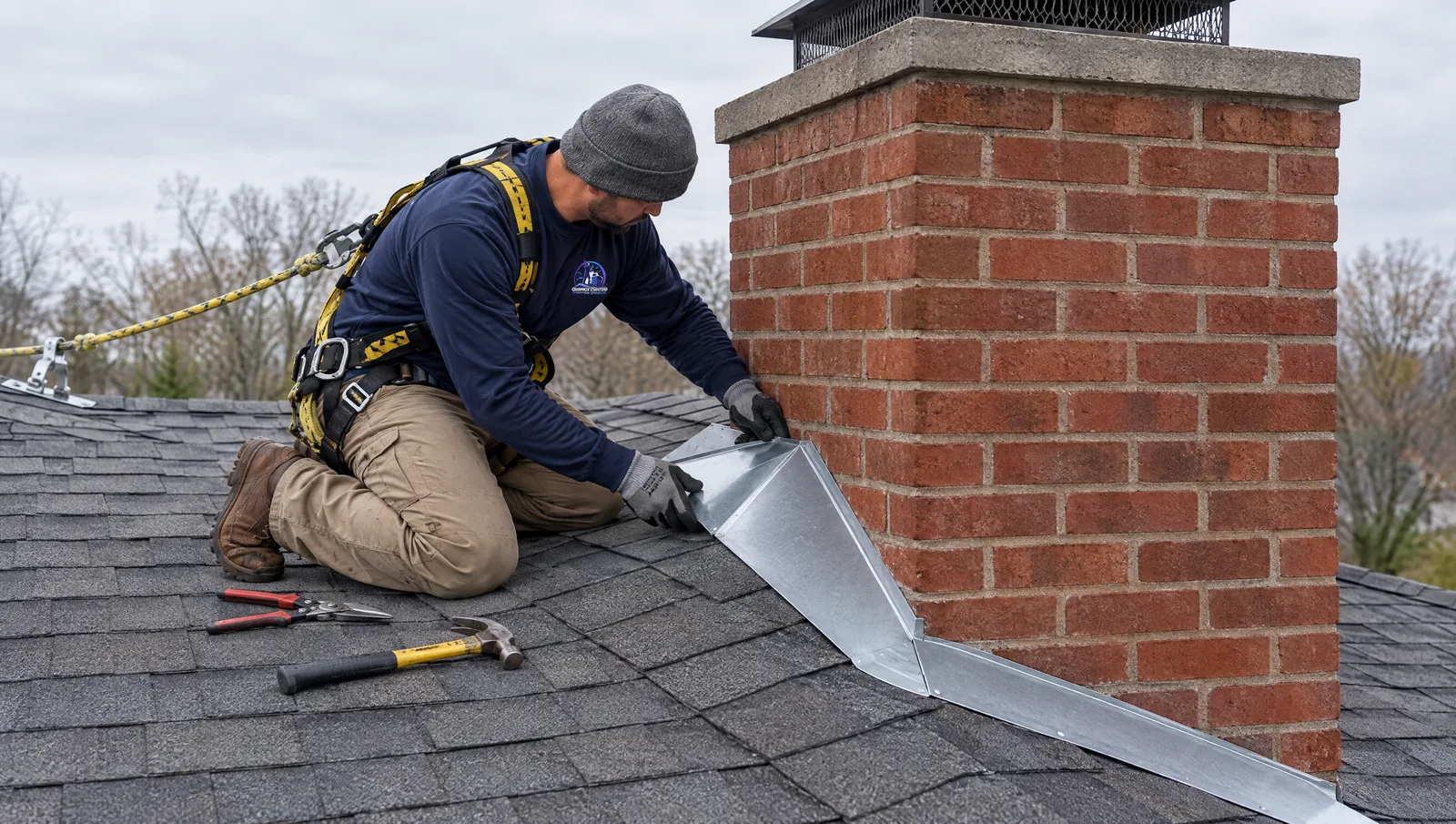
Why a slow flashing leak should not wait
A small drip at the chimney rarely stays small. Water that runs down the framing can rot the sheathing and rafters around the chimney opening, soak insulation and feed mold in the attic. Wood near a chimney also has required clearances from the masonry, so damaged framing in that spot needs careful repair.
What flashing day looks like
We lift the shingles around the chimney, remove the old metal and tar, and check the wood underneath. New step flashing goes in course by course, the reglets are cut and the counter flashing is set and sealed. Once the shingles are back down, we show you photos of each side of the finished chimney.
Chimney flashing questions
Can roofing tar fix leaking chimney flashing?
Only for a short time. Tar dries, cracks and pulls away from the brick within a season or two, and it can hide the real problem, so properly layered metal flashing is the lasting fix.
Should chimney flashing be replaced when I get a new roof?
Usually yes. The step flashing is woven into the shingles, so a roof replacement is the best time to install new flashing instead of reusing worn metal.
What is a reglet in chimney flashing?
A reglet is a narrow cut made into a mortar joint of the chimney. The top edge of the counter flashing slides into it and is sealed, which keeps water from running behind the metal.
How do I know if the leak is the flashing or the crown?
Stains low on the ceiling beside the chimney often point to flashing, while water in the firebox points higher up. An inspection of the roof and attic usually tells the two apart.
Our other services
Areas we serve
We bring this service to Bloomfield and every town below.
Stop the leak at the roof line
Tell us where the stain is, or call (973) 786-9077. We will find the source and price the fix for free.