
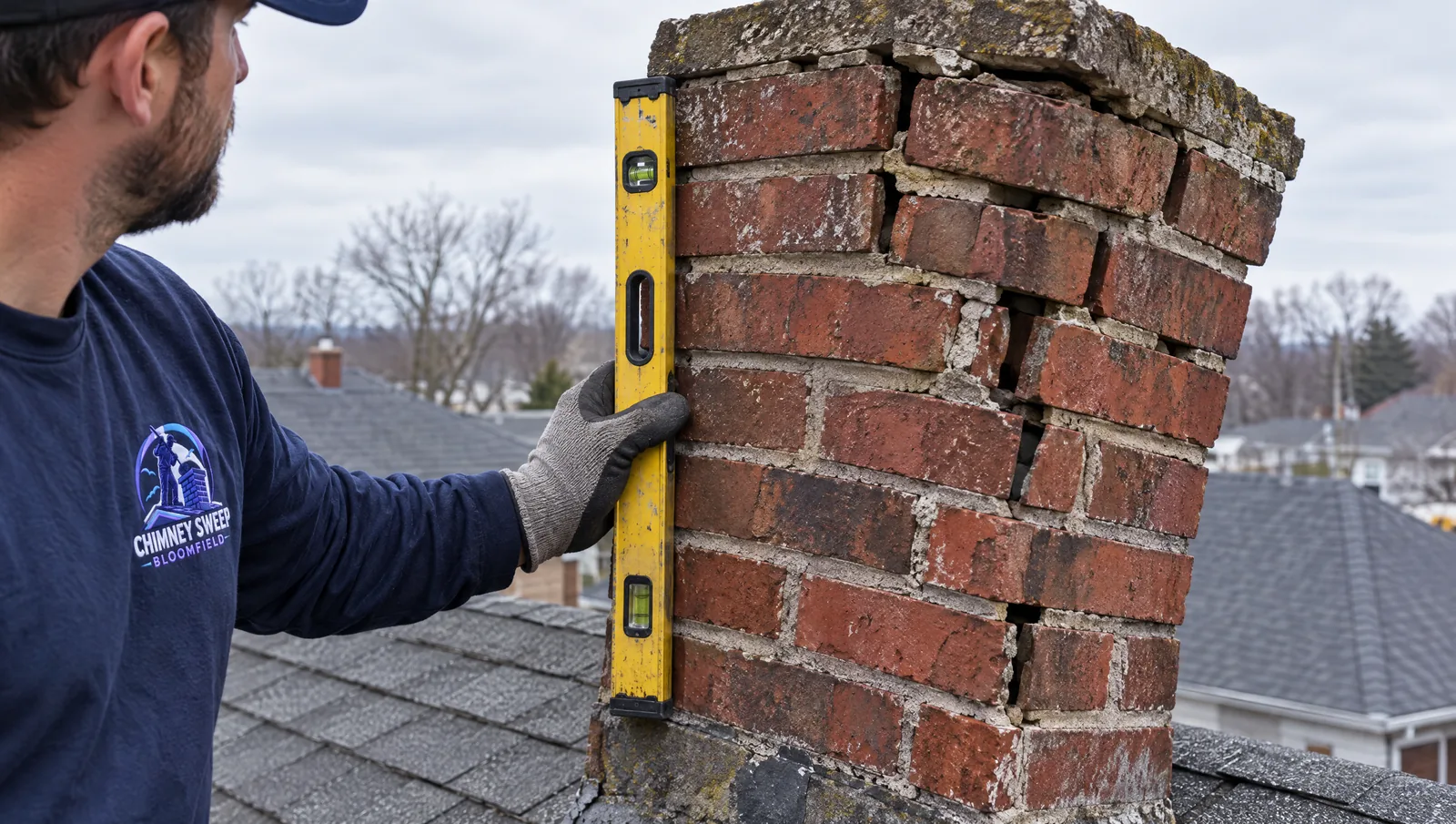
Most deteriorated chimneys can be repaired. A rebuild becomes the better choice when the damage has moved from the surface of the masonry into its structure: when bricks are loose rather than worn, when the chimney leans or has pulled away from the house, or when so much of it needs work that patching would cost nearly as much and last far less. The rest of this article explains where those lines usually fall.
Three levels of fix, not two
It helps to think of the choice as three options.
- Repair keeps the chimney as it is and fixes specific parts: repointing worn joints, replacing a few damaged bricks, a new crown, new flashing, a new cap.
- Partial rebuild takes the chimney down to sound masonry, usually somewhere above the roof line, and lays it back up with new brick and a new crown.
- Full rebuild takes the whole chimney down, sometimes all the way to the footing, and builds it again.
When repair is the right call
Repair makes sense when the chimney is plumb, the bricks are firmly bonded, and the damage sits on the surface. Typical cases:
- mortar joints that are sandy or receding while the bricks are still tight
- a few spalled bricks scattered across an otherwise sound face
- a cracked crown on a chimney whose top courses are solid
- leaks traced to the flashing or a missing cap
Done early, these repairs can add many years to a chimney. The catch is that they are often put off, and each winter of water and frost pushes a repair closer to a rebuild. Our article on spalling brick explains how that slide happens.
When a partial rebuild makes more sense
The section above the roof takes the most weather, so it usually fails first. A partial rebuild is often the answer when:
- the top courses are loose and can be moved by hand
- most bricks above the roof have lost their faces, rather than a scattered few
- mortar has washed out so deeply that the bricks are barely held in place
- the crown has failed and the brick under it has broken down with it
Rebuilding the top also gives a clean chance to set the height correctly, form a proper crown that overhangs the brick so water drips clear, and cut new counter flashing into fresh mortar joints.
Signs that point to a full rebuild
A full rebuild is the bigger job, and it is called for when the problem runs through the whole chimney:
- the chimney leans, or a gap has opened between it and the wall of the house
- the footing has settled, and cracks run up through the masonry from the ground
- the inside of the chimney is crumbling, with broken liner tiles and loose brick in the flue
- a falling tree or another impact has knocked the chimney out of line
A leaning or separating chimney should not be left for later. Loose masonry can fall, and a chimney pulling away from the house can open gaps that let heat and gases reach the framing.
Questions that help decide
Is every flue still in use? A chimney that only served an old furnace that has since been replaced with a side-wall vent may not need to be rebuilt to full height. Depending on what still uses it, taking it down below the roof and closing it off can be an option.
What shape is the liner in? If the flue needs a new liner anyway, plan the masonry and the liner together so nothing is done twice.
Can the brick be matched? On an older house the look of the chimney matters. Reclaimed brick or carefully chosen new brick, with a mortar color that suits the rest of the house, keeps a rebuilt section from standing out.
Will a permit be needed? A rebuild is structural work, so ask early whether the town's construction office requires a permit. In a historic district, changes to how the chimney looks may also need approval from the local preservation commission.
Getting a straight answer
The fair way to decide is to look at the whole chimney, including the inside of the flue and the parts in the attic, and price both options side by side. Sometimes a careful repair is the better value. Sometimes repairs would only hold off a rebuild for a few years. Our chimney rebuild page explains what partial and full rebuilds involve and how the work is done.
Repair or rebuild?
We will look at the whole chimney and price both options side by side. The estimate is free.
Chimney rebuild Get a Free EstimateMore reading: what spalling brick means · signs your chimney needs repair