Chimney Masonry Repair in Bloomfield, NJ
Worn mortar joints and flaking brick, repaired with materials that suit the chimney you have.
Brick lasts a long time. The mortar between the bricks does not, and once the joints wear down, water gets into the wall and starts working on the brick itself. Chimney masonry repair in Bloomfield, NJ is mostly about catching that cycle early: grinding out tired joints, setting new mortar and replacing bricks that have started to flake.
This page covers the brick and mortar of the chimney above and below the roof. A cracked crown or a rusted cap is a chimney repair job, leaks where the chimney meets the shingles are flashing repair, and a stack that is leaning or loose needs a chimney rebuild. The estimate is free.
What failing chimney masonry looks like
- Mortar joints that have sunk back from the face of the brick, or that crumble when scratched with a key.
- Brick faces that have popped off in flakes or chunks, leaving rough, pitted brick behind. This is called spalling.
- White, powdery deposits on the brick, known as efflorescence.
- Green moss or dark wet patches that stay on one side of the chimney long after rain.
- Bits of sand and mortar in the gutter below the chimney.
Why brick and mortar break down
Water and cold are the main causes. Brick and mortar soak up rain, and when that water freezes it expands inside the pores. After enough freeze and thaw cycles, the face of the brick lets go. A chimney stands above the roof with no shelter on any side, so it takes more weather than any other masonry on the house.
Efflorescence is a sign of the same water. As moisture moves through the brick, it carries salts out to the surface and leaves them behind when it dries.
How we judge the masonry
We look at every face of the chimney, test joints with a tool to see how deep the damage goes, and note which bricks are spalled or loose. We also look for where the water is coming from, because repointing a chimney that still has a cracked crown or open flashing only buys a few years.
If the brick inside the attic or around the flue is part of the question, we check that too.
Chimney masonry repair by repointing
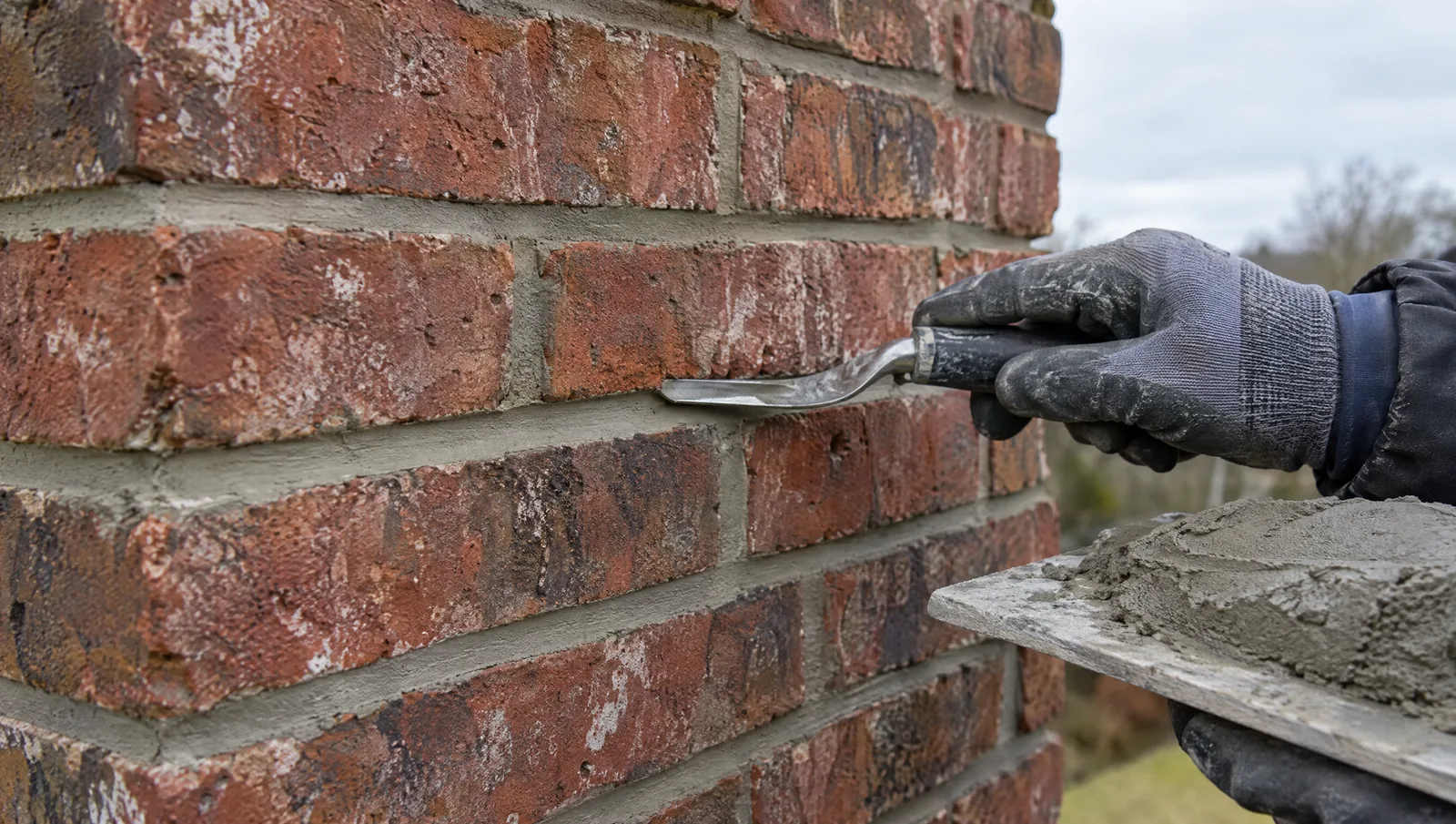
Repointing, sometimes called tuckpointing, means cutting the old mortar out of the joints to a consistent depth and packing new mortar in, in layers, then tooling it to match the existing joints. The mortar is chosen to suit the brick. On a newer chimney with hard brick, a Type N or Type S mix is usual. On older, softer brick, a lime-rich mortar is the better match, because the mortar should always be softer than the brick around it. Hard mortar in soft brick forces the brick to take the stress, and the brick cracks instead of the joint.
Replacing spalled and loose brick
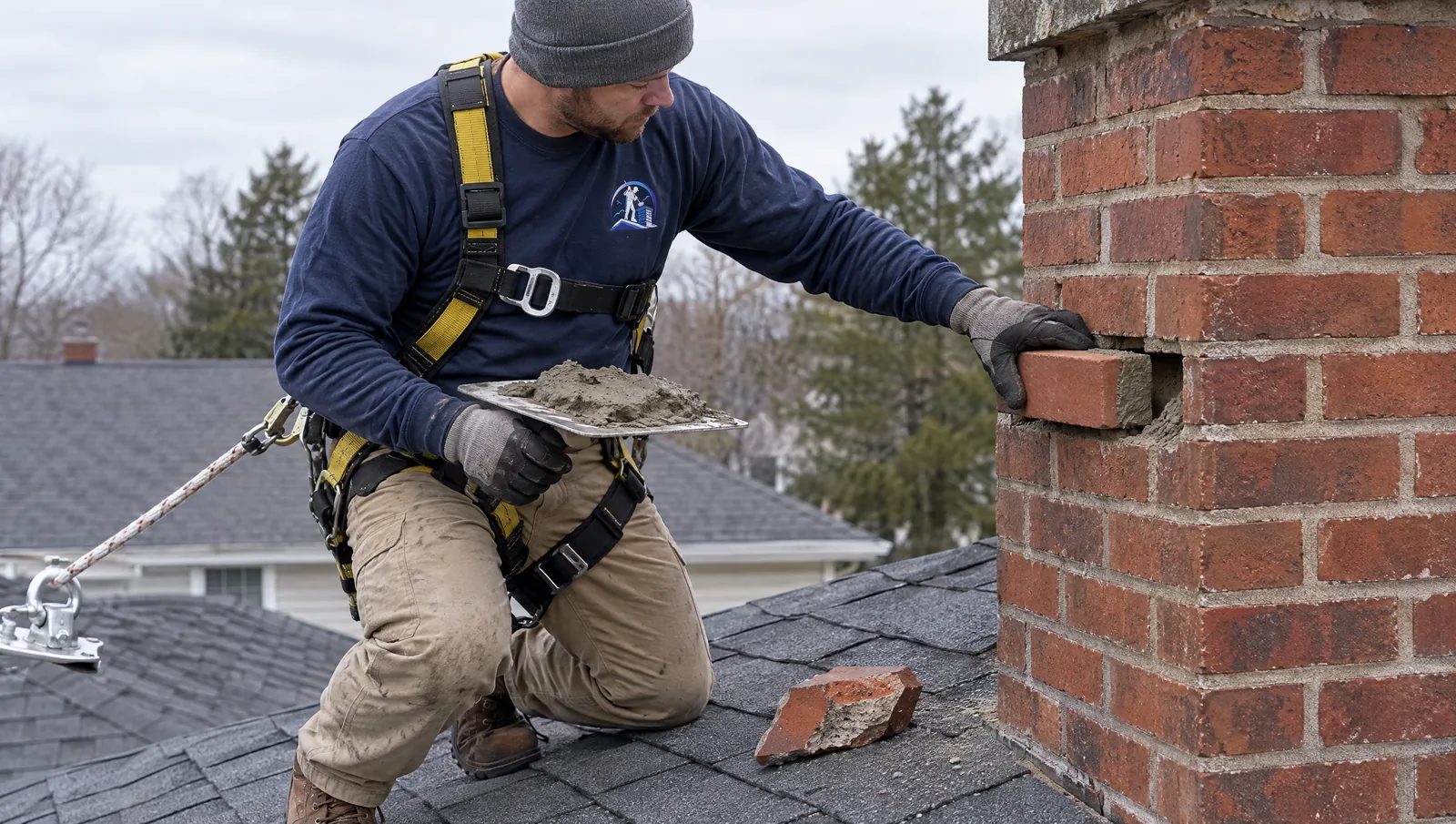
A brick that has lost its face cannot be patched in a way that lasts. We cut it out, set a replacement that matches the size, color and texture as closely as we can, and point it in. When a few bricks are involved, this is a straightforward repair. When whole courses near the top are soft or loose, the safer fix is to take that section down and relay it, which is covered under chimney rebuild.
What moves the price of masonry work
- How many joints need repointing, and whether it is one face or the whole chimney.
- How many bricks need replacing, and how hard they are to match.
- The type of mortar the brick calls for.
- Roof pitch, chimney height and whether scaffolding or roof brackets are needed.
Every price comes after we have seen the chimney, and the estimate is free.
What not to put on brick
Paint, tar and glossy sealers trap moisture inside the brick, and that speeds up spalling instead of stopping it. If a water repellent is used at all, it should be a breathable, vapor-permeable product applied after repairs are done. Loose brick at the top of a chimney is also a falling hazard for anyone below, so it should not wait.
How a masonry repair day goes
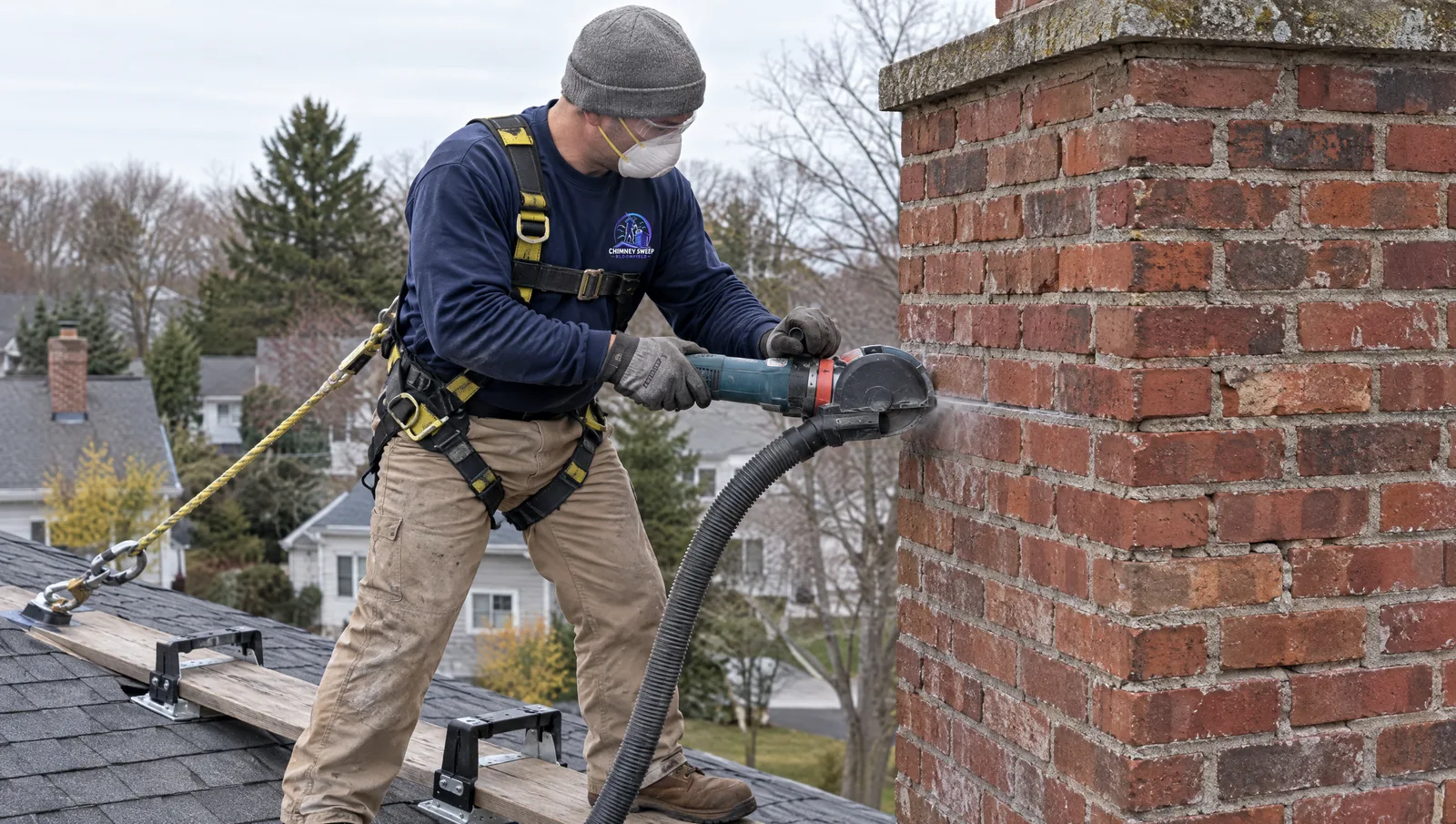
Masonry work makes dust, so we cover the roof around the chimney and anything below. Joints are cut out with a grinder and hand tools, then refilled and tooled. Mortar needs time to cure, so the work is planned around weather that is not too cold or too wet. We clean the brick face when the joints are set.
Chimney masonry questions
What is the white powder on my chimney brick?
That is efflorescence, salt left behind by water moving through the masonry. The powder itself is harmless, but it tells you water is getting in and the source should be found.
How often does a brick chimney need repointing?
There is no fixed schedule. Mortar on an exposed chimney usually wears faster than the rest of the house, so it is best to check the joints every year and repoint when they recede or crumble.
Can spalled brick be fixed with a patch or sealant?
Not in a lasting way. A patch on a spalled face usually falls off within a few winters, so the damaged brick should be cut out and replaced with a matching one.
Why does the mortar type matter on an old chimney?
Older brick is often softer than modern brick. Using a mortar that is harder than the brick makes the brick crack and flake, so the mix is chosen to be weaker than the brick it holds.
Our other services
Areas we serve
We bring this service to Bloomfield and every town below.
Get your chimney masonry looked at
Send a photo of the brick or call (973) 786-9077, and we will tell you what it needs for free.