
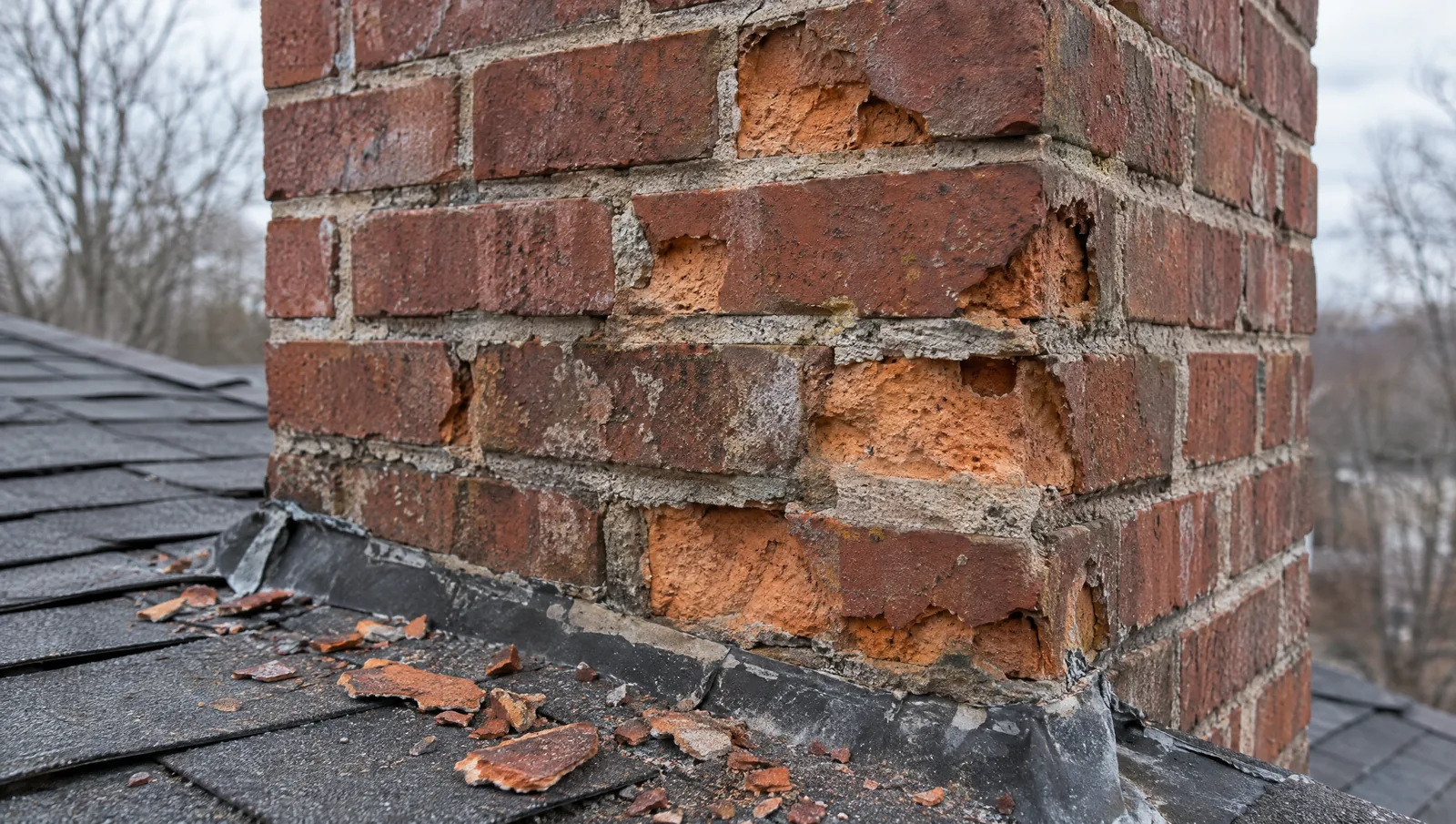
Spalling is when the face of a brick flakes, pops or peels away, leaving a rough, crumbly surface behind. On a chimney it nearly always means one thing: water is getting into the brick and freezing there. The flaking is the visible end of a moisture problem, so fixing it well means dealing with where the water comes from, not only replacing the damaged brick.
What you are looking at
A spalled brick looks as if someone took a chisel to it. The smooth outer skin is gone, and the softer inside of the brick shows through. Sometimes the face comes off in one thin plate. Sometimes it crumbles into sand and red chips that collect in the gutter or on the shingles below the chimney.
It helps to tell spalling apart from two problems that often sit next to it:
- Efflorescence is a white, powdery stain on the surface. The brick is intact. The stain is salt carried out by water as the masonry dries.
- Eroded mortar is when the joints between bricks turn sandy and recede while the bricks stay whole.
All three share a cause, but spalling is the one that means the brick itself is being lost.
How freezing water breaks brick
Brick is porous. It soaks up rain the way a clay flowerpot does. When the temperature drops below freezing, the water inside turns to ice and expands by roughly nine percent, pushing outward from inside the brick. One freeze does little. Dozens of freeze and thaw cycles every winter, year after year, pry the outer face loose a layer at a time. Winters that hover around the freezing mark, with thaws between cold snaps, give this process plenty of chances to work.
Why chimneys spall more than the walls of the house
A chimney takes more weather than any other masonry on a house. The part above the roof is exposed on four sides and the top, with no eaves to shelter it. Several other things make it worse:
- A cracked crown or missing cap. Water that gets into the top of the chimney soaks down through the brick from above.
- Condensation from inside. Exhaust from a gas furnace or water heater carries water vapor. In a flue without a sound liner, that moisture soaks into the brick from the inside out.
- Mortar that is too hard. Older brick was laid with softer mortar. When it is repointed with a hard, high-cement mix, the mortar no longer gives way first. Stress and moisture move into the brick instead, and the brick faces break.
- Coatings that trap water. Paint, some sealers and thick caulk can hold moisture behind the brick face. Water still gets in through cracks, but it cannot dry out, so it freezes in place.
- Pressure washing. High pressure strips the hard outer skin off older brick and opens the softer core to water.
Is spalling dangerous?
A few flaked brick faces are a warning, not a crisis. The trouble is that spalling speeds up. Each lost layer exposes softer material that soaks up even more water. Left alone, bricks lose enough depth that the mortar joints fail, the top courses loosen, and pieces can fall from the roof line. Loose masonry above a walkway, a driveway or a neighbor's yard should be dealt with quickly.
Spalling inside the firebox is a separate concern. A firebox is built from firebrick set in heat-resistant mortar. If that brick is cracking or crumbling, the fireplace should not be used until it is repaired.
How it gets repaired
The repair depends on how far the damage has gone:
- A handful of damaged bricks are cut out and replaced with sound brick of a matching size and color.
- Worn joints around them are raked out and repointed with a mortar suited to the age and hardness of the brick.
- The water source is fixed at the same time, usually the crown, the cap or the flashing.
- Once the masonry is sound and dry, a breathable water repellent can cut down how much rain the brick absorbs without sealing moisture inside.
When most of the brick above the roof has spalled, replacing it one unit at a time stops making sense, and a partial rebuild of the top section is usually the cleaner answer. The details of both approaches are on our chimney masonry repair page, and the article on rebuilding versus repairing a chimney explains where that line usually falls.
What not to do
Do not paint over spalled brick or smear it with patching cement. Both hide the damage for a season and then fail, often taking more brick with them. Do not coat the chimney with a product that is not made for masonry. And do not wait for the flaking to stop on its own. It will not, because the water that causes it comes back every time it rains.
Flaking brick on your chimney?
We will find where the water is getting in and price the repair. The estimate is free.
Chimney masonry repair Get a Free EstimateMore reading: rebuild versus repair · crown and cap upkeep