
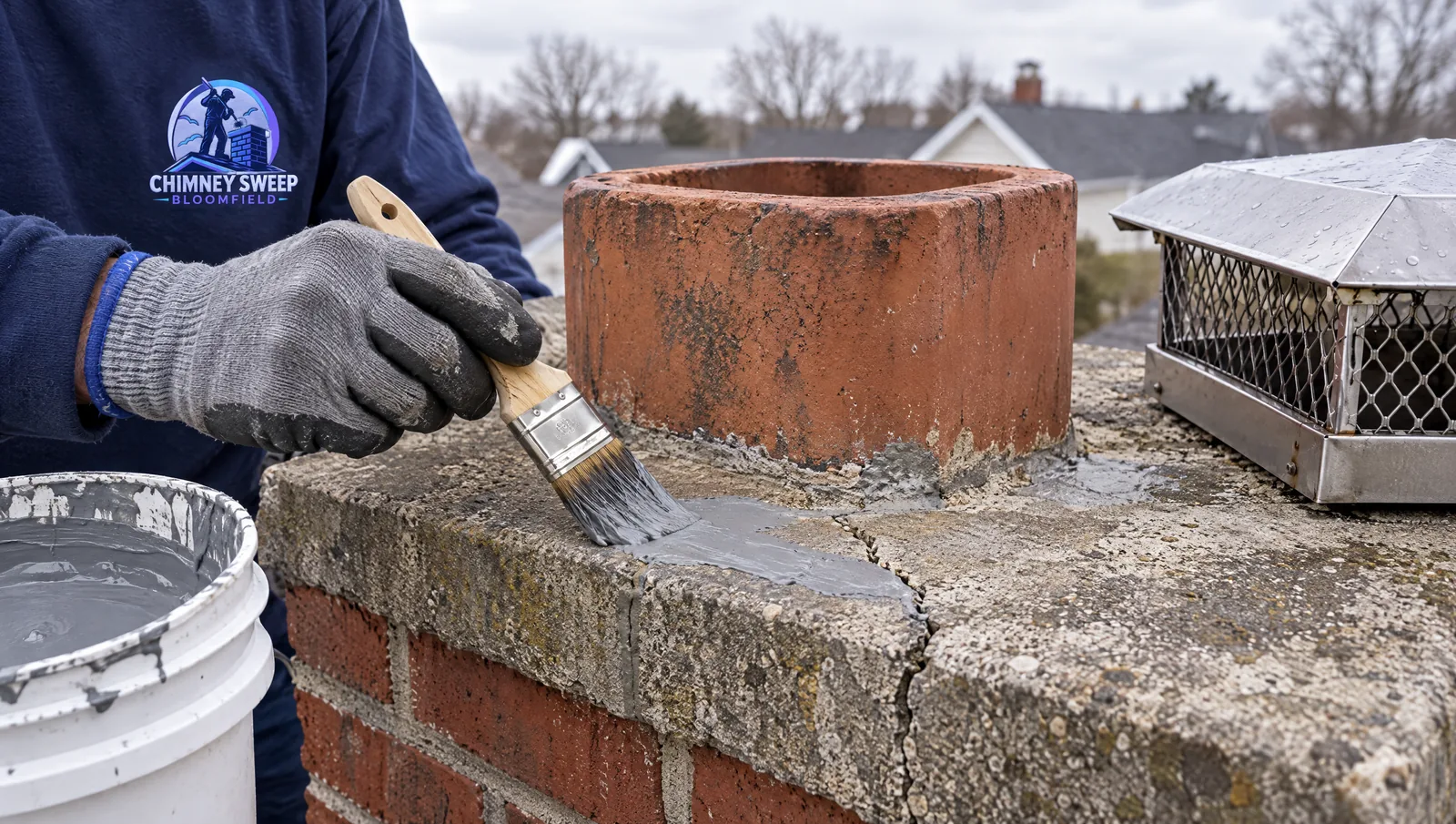
The crown and the cap are the two parts of a chimney that stand between your house and weather coming straight down. In Belleville, where a large share of homes date from the first half of the twentieth century, they are also the parts most likely to have been patched, painted over or simply forgotten. A few minutes of attention each year keeps them working, and catching a crack early costs far less than rebuilding the top of a chimney later.
A quick look at Belleville's houses
Belleville sits on the west bank of the Passaic River, with the Second River running along much of its border with Newark. The town grew fast early in the last century. Its population went from under 6,000 in 1900 to almost 27,000 by 1930, and the houses built for those newcomers still make up much of what lines its streets. Census estimates for 2020 to 2024 put about a third of Belleville homes in the "built 1939 or earlier" group and roughly another sixth in the 1940s. About one home in five is in a two-unit building, which usually means a two-family house.
That mix matters at the top of the chimney. Older crowns were often just mortar spread over the top bricks. A two-family house often has one chimney carrying flues for two sets of appliances, which means a wider top and more than one flue to cover.
What the crown does, and how it fails
The crown is the slab that seals the top of the chimney around the flue tiles. A well-built crown is cast from concrete, slopes away from the flue, and overhangs the brick by an inch or two, with a groove underneath so water drips clear instead of running down the face.
Many older chimneys have what is better called a mortar wash: a thin layer of mortar troweled across the top bricks with no overhang. Mortar is not made for that job. It shrinks, cracks and lets water into the top courses of brick. Even a proper crown will crack if it is bonded tight to the flue tile, because tile and concrete expand at different rates as the chimney heats and cools.
Signs a crown is failing:
- hairline or open cracks across the top, visible from an upstairs window or with binoculars
- grey chips in the gutter below the chimney
- flaking brick or white staining on the top few courses
- water in the firebox or on the damper after rain
What the cap does
A cap is a metal hood over the flue with mesh around its sides. It keeps rain out, stops birds and squirrels from nesting inside, and on a wood-burning fireplace it helps hold back sparks. On a chimney with two or more flues, one wide cap can cover the whole top, or each flue can have its own.
Caps fail more quietly than crowns. Galvanized steel rusts. Mesh clogs with soot or leaves, which can slow the draft. Strong winds bend or lift caps that were held by only a couple of screws. A clogged or missing cap on a flue that serves a gas furnace or water heater deserves quick attention, since a blocked flue can push exhaust back into the house.
An upkeep calendar for the top of the chimney
Every spring. After the heating season, look at the crown and cap from the ground or an upstairs window. According to the New Jersey state climatologist, coastal storms known as nor'easters are most frequent between October and April, so spring is when winter damage tends to show.
Every fall. Before the heat goes on, have the chimney inspected and the cap checked for clogged mesh and nests.
After a big storm. Make sure the cap is still there and sitting straight. A cap that blew off is easy to miss from inside the house.
Every few years. A sound concrete crown can be coated with a flexible crown sealer that bridges fine cracks and slows water absorption.
Seal it, or replace it?
Hairline cracks in an otherwise sound crown can be sealed. A mortar wash that is cracked across, or a crown that is breaking up, should be replaced with a properly formed crown that overhangs the brick and is separated from the flue tile so it can move. A rusted cap is best replaced with stainless steel, sized either to the flue or to the full top of the chimney. Both jobs are done from the roof and are often done on the same visit. Crown and cap work is described on our chimney repair page, and our Belleville chimney sweep page covers inspections and sweeping for homes across the township.
Cracked crown or rusted cap?
We will check the top of the chimney and price the crown or cap work. The estimate is free.
Chimney sweep in Belleville Get a Free EstimateMore reading: why a chimney leaks when it rains · what spalling brick means