
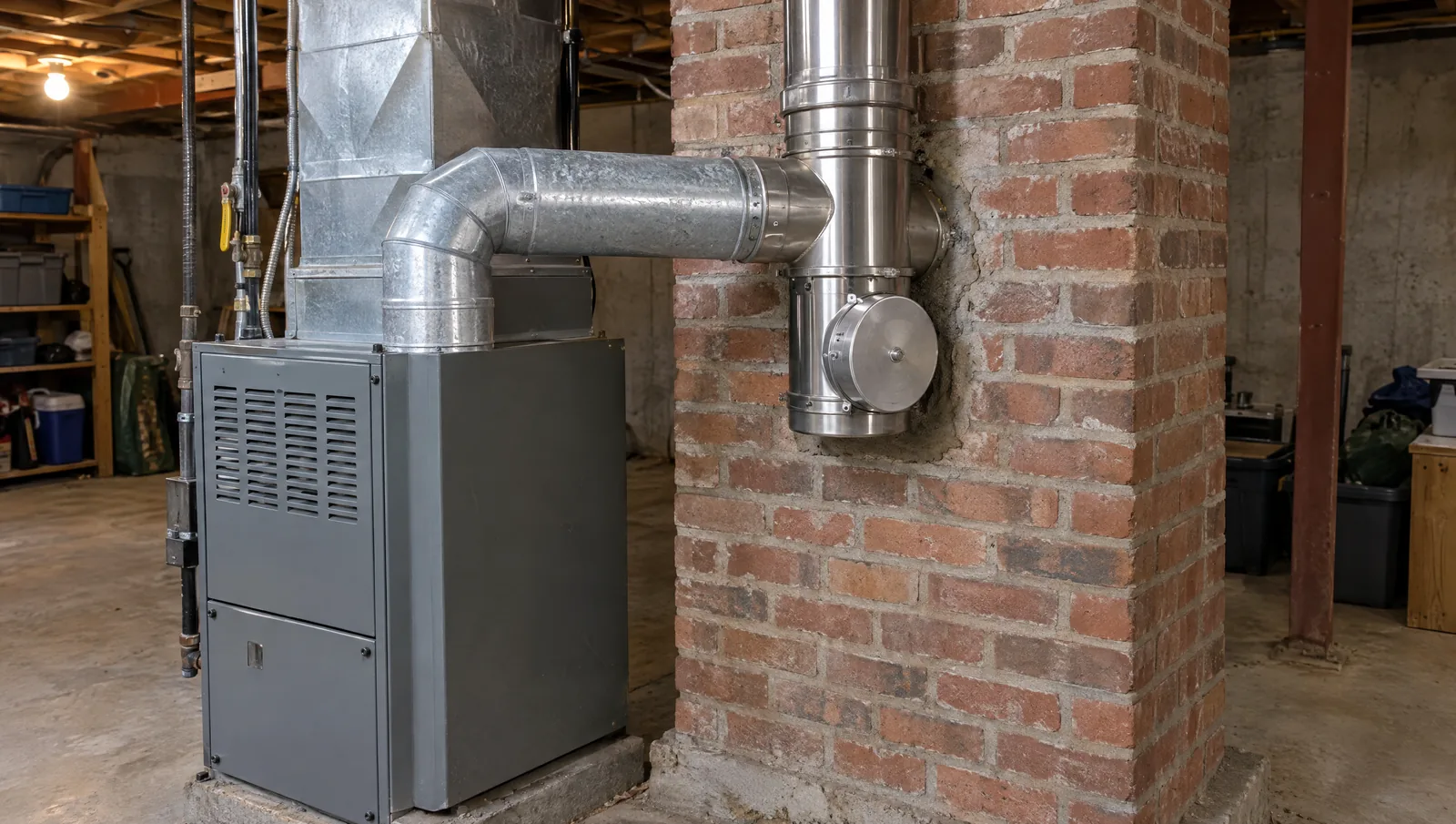
If a gas furnace or water heater in an older Orange home vents into a masonry chimney, there is a good chance the chimney was never designed for it. Gas exhaust is cooler and wetter than the smoke from the coal or wood the chimney was built for. In a large, unlined or cracked flue, that exhaust can condense, eat away at the masonry and, in the worst cases, fail to draft and spill carbon monoxide into the house. A correctly sized liner solves most of it.
Why this comes up so often in Orange
The City of Orange Township is one of the older places in Essex County. Families from the New Haven Colony settled the area in 1666, and the township was incorporated in 1806. Through the 1800s it was known as the country's hat-making center, and by 1892 its hat factories employed more than 3,700 people. The population climbed from 8,877 in 1860 to a peak of 38,037 in 1950.
A city that grew that much before the middle of the last century has a lot of chimneys that were built long before modern gas heating. Over the decades, many of those homes switched from coal or oil to gas, and the new furnace or boiler was often connected to the old flue without much thought about whether the two matched. Orange is also tightly built, with more than fifteen thousand residents per square mile, so in many neighborhoods a venting problem in one house is only a few feet from the windows of the next.
What goes wrong inside an old flue
A chimney only drafts well when the exhaust stays warm enough to rise. Here is what happens when a modern gas appliance shares an old masonry flue:
- The flue is too big. A chimney sized for a coal furnace or fireplace can be several times larger than a gas appliance needs. Small volumes of exhaust cool down in all that space and rise slowly.
- Water condenses on the walls. Burning natural gas produces a lot of water vapor. When it cools on cold brick or clay tile, it turns back into liquid, and that liquid is mildly acidic.
- The acid attacks mortar and tile. Over time it softens mortar joints, cracks and flakes clay liners, and can leave a pile of crumbled tile at the base of the flue.
- Debris blocks the bottom. That fallen tile and mortar can partly block the opening where the appliance connects, which makes the draft even weaker.
There is a common twist in older homes. When a furnace is replaced with a high-efficiency model, the new unit usually vents out the side of the house through plastic pipe. The water heater is then left alone in a flue that was already oversized. With so little warm exhaust going up, it is even more likely to condense and backdraft.
Warning signs to look for
Some of these you can see from the basement or the outside of the house:
- White or brown staining on the outside of the chimney, especially near the top.
- Damp patches or peeling paint on walls next to the chimney inside the house.
- Rust on the vent pipe where it enters the chimney, or water dripping from it.
- Bits of clay tile or sandy mortar in the cleanout door at the base.
- Soot or scorching around the draft hood on top of a water heater.
- A carbon monoxide alarm that sounds, even once. Treat that as urgent. Leave the house and call the gas utility or the fire department first.
How a liner fixes the problem
A liner is a pipe that runs the full height of the chimney and carries the exhaust on its own. For gas appliances it is usually stainless steel, and it is sized to the appliances that use it rather than to the old masonry opening. A smaller, smooth, insulated passage warms up quickly, keeps the exhaust moving and keeps moisture away from the brick.
The size matters as much as the material. Too large and it condenses like the old flue did. Too small and it cannot carry the exhaust. The right size depends on each appliance connected, the chimney height and how the connector pipes run. Our chimney liner replacement page explains the liner types and when each one fits.
What to do before you change a furnace or water heater
If you are planning to replace heating equipment in an Orange home, talk about the chimney at the same time. Ask the installer how the new appliance will vent and whether anything will be left behind in the old flue. A change of appliance is one of the situations where the NFPA 211 standard calls for a Level 2 inspection, which includes a camera look down the full flue. We charge $350 for a Level 2 inspection, and a basic Level 1 inspection is free.
If your furnace already vents into an old chimney and you have never had the flue checked, start there. Our chimney sweep page for Orange covers what we look at in town, or call (973) 786-9077 to set up a visit.
Not sure your furnace is venting safely?
We can inspect the flue, check its size against your appliances and explain the options. The estimate is free.
Chimney sweep in Orange Get a Free EstimateMore reading: how to tell a chimney liner is failing · when you need a Level 2 inspection