
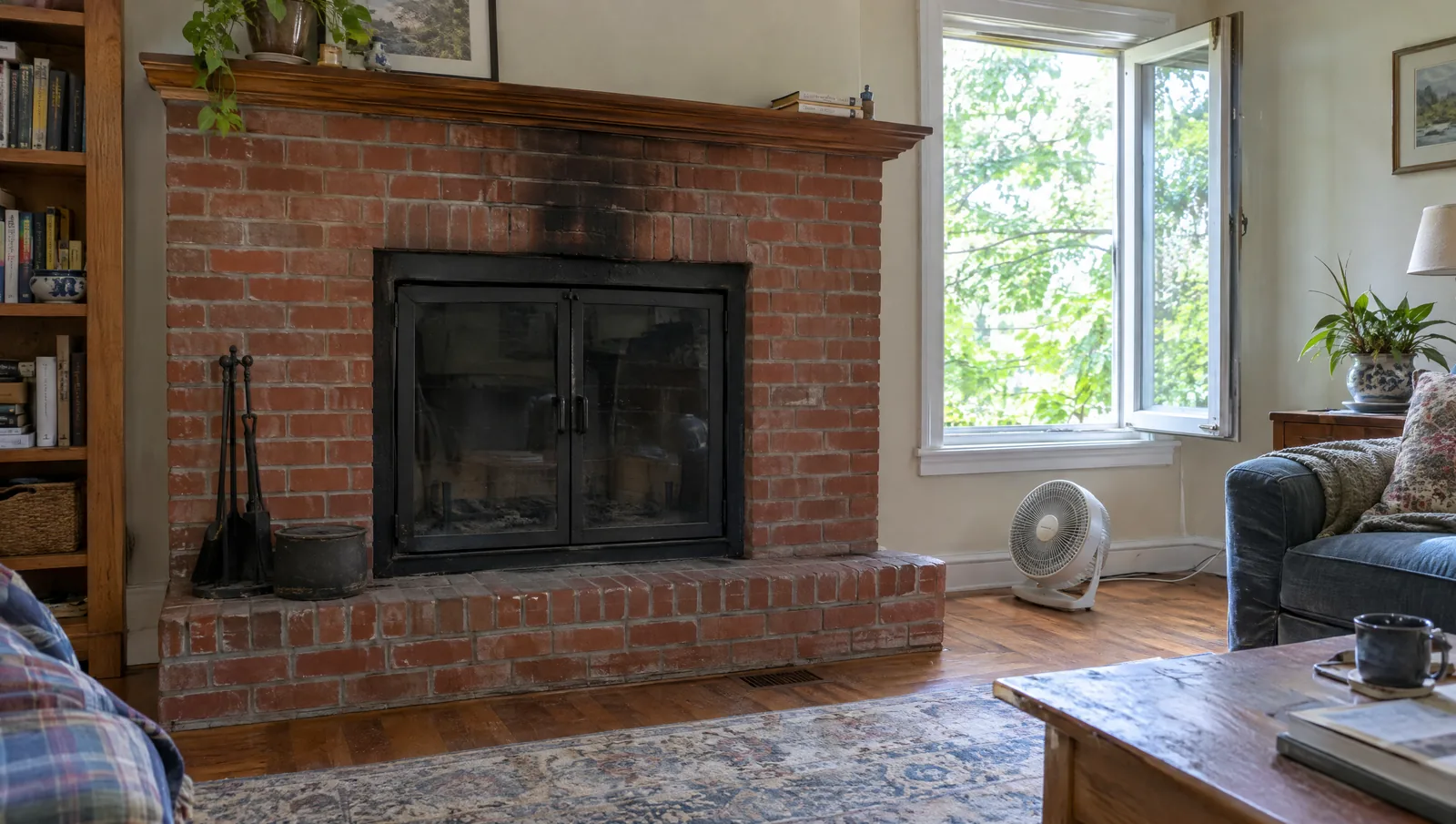
A fireplace that smells worse in July than it did in January is usually telling you two things. There is creosote or other residue in the flue, and air is moving down the chimney into the room instead of up and out. Humid summer air makes the first problem smell stronger, and a closed-up, air-conditioned house makes the second one more likely. Both can be fixed.
North Arlington is the southernmost town in Bergen County, set along the Passaic River across from Belleville. Summers here follow the usual New Jersey pattern of warm, humid weather, and statewide records show warm nights above 70°F have become more common since the 1960s. That is exactly the kind of weather that brings chimney smells out of a quiet fireplace. The questions below cover what homeowners ask most.
What does the smell actually come from?
In most cases it is creosote. Creosote is the dark, tarry residue that wood smoke leaves on the inside of the flue. It is porous and holds odor. When the air is dry and cold, it barely smells. When the air is warm and damp, moisture settles into those deposits and releases that sharp, smoky, ashtray smell you notice the moment you walk into the room.
Not every smell is creosote, though. The kind of odor is a strong clue:
- Stale smoke or ashtray: creosote and soot in the flue or smoke chamber.
- Musty or damp basement smell: water getting into the chimney, often through a missing cap, a cracked crown or worn flashing. Wet masonry and wet ash smell like a cellar.
- A sour or rotten smell: often an animal. A bird, squirrel or raccoon may have nested or died in the flue, and the smell can be strong in warm weather.
- Earthy or leafy: leaves, twigs and other debris collected on the smoke shelf or damper.
Why is it worse when the air conditioning is running?
A house is always trading air with the outdoors. Kitchen hoods, bathroom fans and clothes dryers push air out, and that air has to be replaced from somewhere. When windows are shut for the air conditioning, one of the easiest paths back in is the chimney. Air flows down the flue, picks up the smell of the deposits on its way, and spills out of the fireplace.
In winter the opposite tends to happen. A warm house and a warm flue pull air up. In summer the chimney is often cooler than the outdoor air during the day, and that can help the downward flow along.
Will a sweep get rid of it?
A professional sweep removes most of the deposits that cause the smell, and for many homes that is enough. If the fireplace saw heavy use last winter, sweeping in late spring or early summer is a good habit rather than waiting until fall. While the flue is open, the sweep can also find nests, debris and water damage that a homeowner cannot see from below.
If a smell comes back within weeks of a sweep, the cause is usually air movement or water, not more creosote. That is when the damper and the cap become the focus.
What stops the downdraft?
A few changes cut off the air path that carries the smell into the room:
- Close the damper and make sure it seals. Old cast iron dampers warp and rust, and many no longer close tightly. Light passing around the edges is a giveaway.
- Consider a top-sealing damper. This mounts at the top of the flue and seals with a rubber gasket when closed. It stops air from entering the flue at all, and it doubles as a rain cover.
- Fit or replace the cap. A cap with a lid and mesh keeps rain from soaking the deposits and keeps animals out. Our chimney repair page covers caps and dampers in more detail.
- Close glass doors on the fireplace. They are not airtight, but they slow the flow into the room.
- Give exhaust fans another source of air. Cracking a window slightly while a big kitchen hood runs can stop it from pulling through the chimney.
Is the smell a safety problem?
The odor itself is not dangerous, but what it points to can be. Heavy creosote is fuel for a chimney fire. A blocked flue from a nest can push smoke and gases back into the house the next time the fireplace or a connected appliance runs. If a gas furnace or water heater vents into the same chimney, a downdraft is worth taking seriously, and a working carbon monoxide alarm on every floor is a must.
Avoid masking the smell with sprays or baking soda trays in the firebox. They hide the symptom and leave the cause in place.
What should a North Arlington homeowner do first?
Start with the simple test. On a humid day, hold a thin strip of tissue near the closed damper. If it flutters into the room, air is coming down the flue. Then book a sweep and an inspection so the deposits come out and the cap, crown and damper get checked at the same time. Our North Arlington chimney sweep page explains how we work in town, and you can reach us at (973) 786-9077.
Tired of the smell?
We can sweep the flue, look for the source and tell you what will fix it. The estimate is free.
Chimney sweep in North Arlington Get a Free EstimateMore reading: how creosote builds up · animals and debris in a chimney