Creosote is the residue wood smoke leaves on the inside of a chimney. Every wood fire makes some. How much stays in the flue depends mostly on how the fire burns, how dry the wood is and how warm the chimney stays. Keeping it under control comes down to three habits: burn dry wood hot, have the flue inspected every year, and sweep it whenever the deposits start to build.
Why it matters in Rutherford
Rutherford sits on a ridge above the Meadowlands, and it grew up early as a commuter town once the Erie Railroad crossed the marshes in the 1840s. Most of the borough's houses today date from a building boom in the 1920s. A number of its older homes are listed on the National Register of Historic Places, including the Kip Homestead, the Yereance-Berry House and the house on Ridge Road where the poet William Carlos Williams lived and kept his medical office.
A chimney that has served a house for a century can work perfectly well, but it is less forgiving. Clay flue tiles from that era may have cracked or shifted, and older fireplaces were often built with large openings. Both of those make it easier for smoke to cool and leave deposits behind. If your Rutherford home still has its original wood-burning fireplace, creosote is the maintenance item to watch most closely.
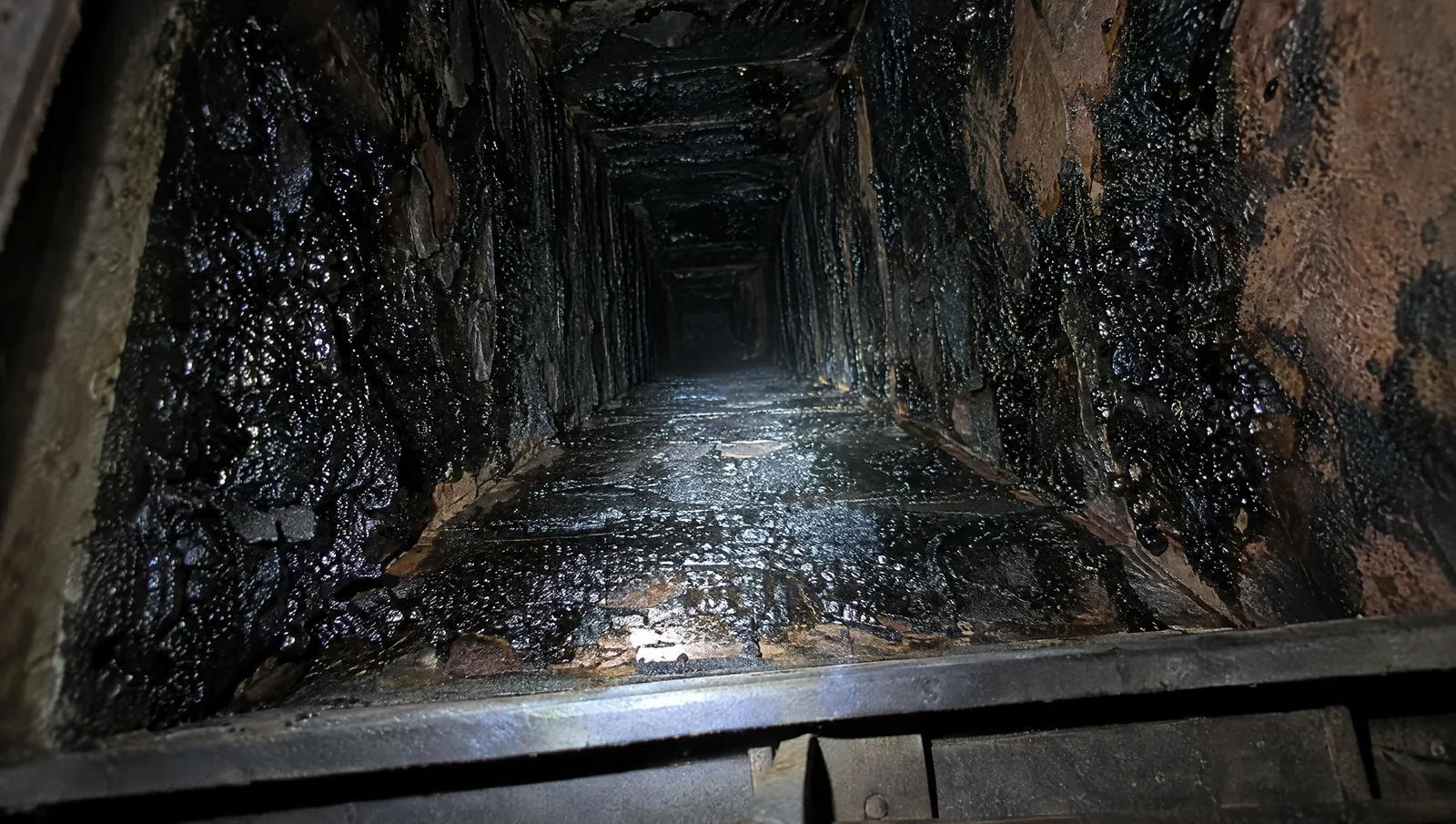
What creosote looks like as it builds
Sweeps usually describe three stages:
- Stage one is a dusty, flaky black soot. It brushes off easily during a normal sweep.
- Stage two is crunchy and shiny, often in small flakes or tar-like beads. It takes more work to remove and builds faster on cooler parts of the flue.
- Stage three is a hard, glazed coating, sometimes dripping like tar. It is very dense fuel and very hard to remove. It usually comes from long, smoky, low-temperature fires.
Creosote at any stage burns. A chimney fire can reach temperatures high enough to crack flue tiles and push heat into the framing around the chimney. Some chimney fires roar and shake the house. Others burn quietly and are only found later, during an inspection.
What makes it build up faster
Look at your own habits against this list. Most homes with heavy creosote tick two or three of these.
- Wet or green wood. Wood that has not dried for at least six months to a year spends its energy boiling off water. The fire runs cool and smoky.
- Smoldering fires. A fire choked down with the damper half closed or the glass doors shut tight burns slowly and coats the flue.
- A cold chimney. Chimneys on an outside wall, and oversized flues, cool the smoke before it reaches the top.
- Short, occasional fires. A fire that never gets the flue fully warm leaves more residue than a steady one.
- Burning the wrong things. Wrapping paper, cardboard and treated or painted lumber add their own residue and sparks.
Burning habits that cut creosote down
Buy or split wood a season ahead and stack it off the ground, under cover on top but open on the sides so air moves through it. Split pieces should have cracked ends and knock together with a hollow sound when they are dry. Hardwoods such as oak and maple burn longer and cleaner than resin-heavy softwoods.
Build smaller, hotter fires rather than one large smoky one, and give them enough air. A fire that burns with lively flames and little visible smoke from the chimney top is doing it right. A heavy plume of gray or yellow smoke outside means the fire is not getting enough heat or air.
How often to have it swept
The NFPA 211 standard calls for chimneys to be inspected every year and cleaned when deposits build up. For an open fireplace used regularly through the winter, that usually means a sweep every year. A fireplace used only on holidays may go longer between cleanings, but the yearly inspection still matters because nests, water damage and cracked tiles do not wait for heavy use. A common rule of thumb is to sweep once the deposit reaches about an eighth of an inch, or any time it looks glazed.
Late spring and early fall are the easiest times to book. Our Rutherford chimney sweep page explains what a visit in town includes, and a Level 1 inspection is free. If a camera look at the full flue is needed, for example after a suspected chimney fire, a Level 2 inspection is $350.
Signs it is time now
Do not wait for the calendar if you notice any of these: a strong campfire smell in the room when the fireplace is cold, black flakes falling onto the grate, a fire that is harder to keep burning than it used to be, or smoke spilling into the room. Any of them can mean heavy deposits. Call (973) 786-9077 and we will take a look before your next fire.
Ready for a sweep before the burning season?
We will clean the flue, check the deposits and let you know how often your fireplace needs it. The estimate is free.
Chimney sweep in Rutherford Get a Free EstimateMore reading: fixing a smoky fireplace · a fall chimney maintenance checklist