
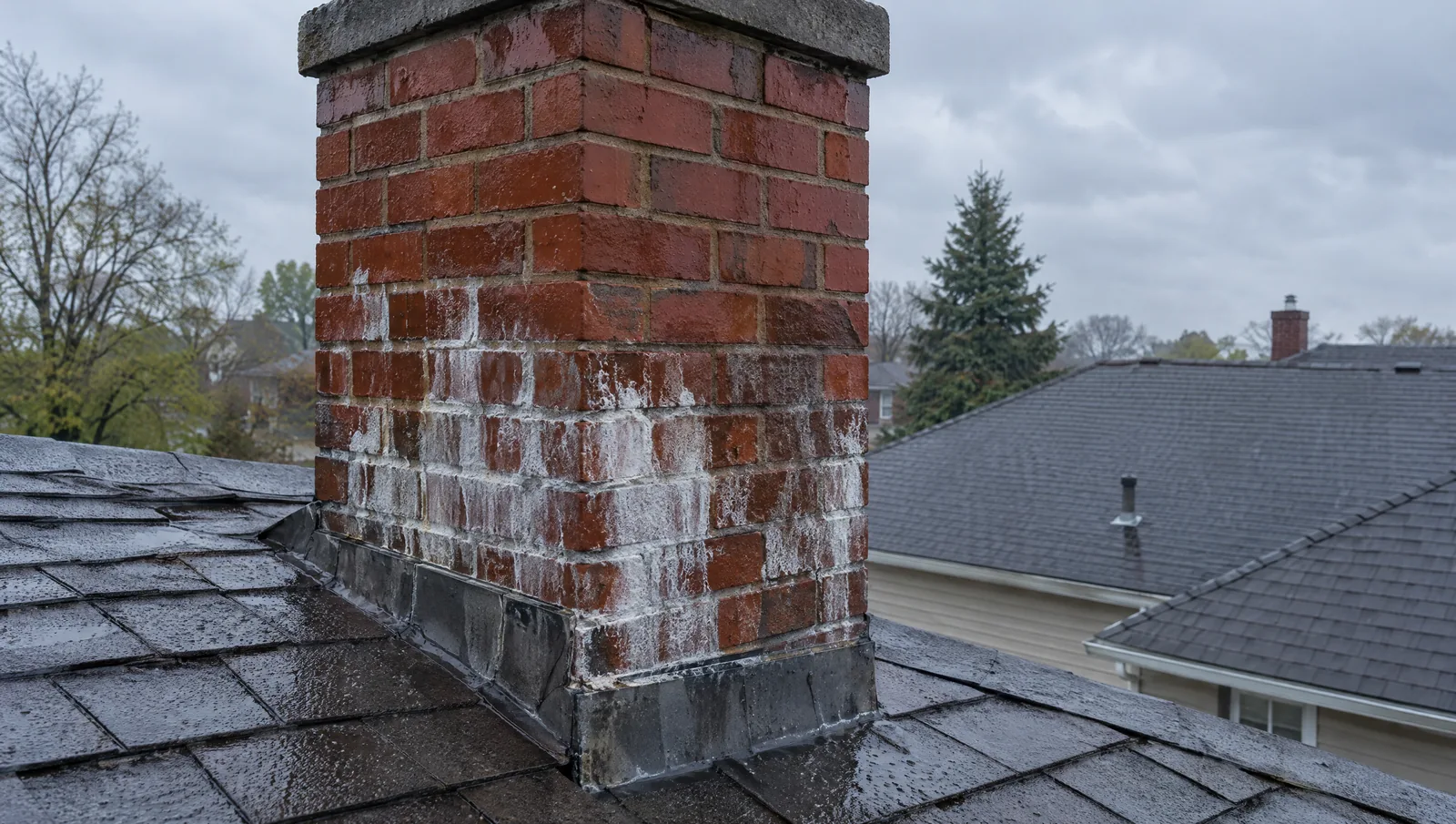
A white, powdery or crusty stain on a brick chimney is called efflorescence. It is salt that water has carried out of the brick and mortar and left on the surface as it dried. The stain itself does no harm. What matters is that it proves water is moving through the masonry, and water inside a chimney is what leads to crumbling mortar, flaking brick and leaks. So the useful question is not how to clean it, but where the water is coming from.
Why Lyndhurst chimneys stay damp
Lyndhurst is about as low and wet as towns in this part of New Jersey get. The township sits only about ten feet above sea level. The Passaic River forms its western border, and the eastern part of the township is Meadowlands wetland. Water covers close to eight percent of its total area.
Low, marshy ground does not soak a chimney by itself, since the chimney is up on the roof. But it does mean damp air, slow drying after rain and long stretches when masonry never fully dries out. Statewide records add to that. New Jersey's yearly rainfall has mostly been at or above average since the 1970s, and heavy downpours of two inches or more in a day have been at or above average over the same period. A chimney that takes on water in a storm here may stay wet for days afterward, and every day it stays wet, more salt works its way to the surface.
Reading the pattern of the stain
Where the white shows up is the best clue to where the water gets in.
Heavy staining near the top, fading lower down. Water is entering from above. The usual causes are a cracked crown, a missing or damaged cap, or open mortar joints in the top few courses.
A band of staining just above the roofline. This often points to the flashing, the metal that seals the chimney to the roof. Water that runs behind loose or failed flashing can wick up and out into the brick.
Staining on one side only. Often the side that faces the prevailing wind-driven rain, or the side that gets the least sun and dries slowest.
White deposits inside the house or in the attic. Staining on the chimney breast indoors, or on the masonry where it passes through the attic, means water has already traveled through the full thickness of the wall. That needs attention soon.
White crust inside the firebox or at the base of the flue. This can come from condensation rather than rain, especially when a gas appliance vents into an unlined or oversized flue.
How to clean efflorescence without harming the brick
If you want the stain gone while the repair is planned, go gently:
- Wait for a dry spell so the surface is fully dry.
- Brush the deposit off with a stiff natural or nylon brush. Most fresh efflorescence comes off this way.
- If some remains, rinse lightly with plain water and let it dry again. Use as little water as you can, because water is what put the salt there in the first place.
- Skip the pressure washer. High pressure drives water deep into the masonry and can strip the face off older brick and the surface off soft mortar.
- Leave strong acid cleaners to a professional. Used wrongly they etch brick and eat mortar.
Expect the white to return if the water source is still open. That is normal, and it is a sign the repair has not been made yet.
Stopping the water at the source
Each of these closes off one way water gets into a chimney. Most chimneys need one or two, not all of them.
- Repair or rebuild the crown so rain runs off its edge instead of soaking the brick below.
- Install a cap with a solid lid and mesh sides so rain does not pour straight down the flue.
- Repoint open mortar joints with a mortar that suits the age of the brick. Our chimney masonry repair page explains how that is done.
- Reseal or replace the flashing where the chimney meets the roof. See chimney flashing repair for what that involves.
- Apply a breathable water repellent once the masonry is sound. It must let vapor escape. A coating that seals moisture in can make the brick spall.
When to have it looked at
A light dusting that appears once after a wet spring and does not come back is not much to worry about. A stain that keeps returning, spreads, or shows up indoors deserves an inspection before the next winter, because water that freezes inside wet brick is what turns a cosmetic stain into real damage. A basic Level 1 inspection is free.
For help with a damp or stained chimney in town, see our Lyndhurst chimney sweep page or call (973) 786-9077.
White stains on your chimney?
We will find where the water is getting in and explain what it takes to stop it. The estimate is free.
Chimney sweep in Lyndhurst Get a Free EstimateMore reading: why a chimney leaks when it rains · what spalling brick means