
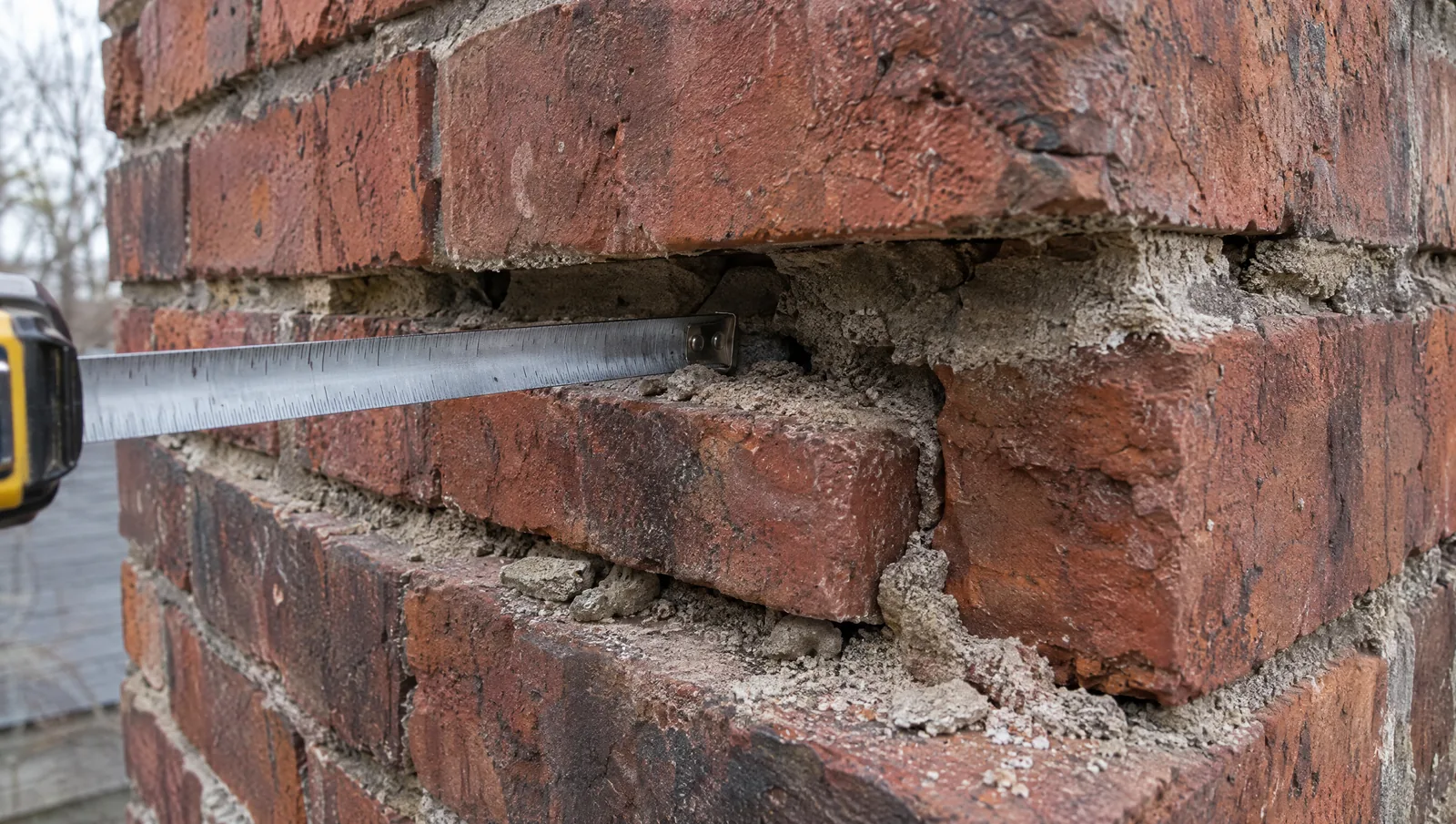
There is no fair flat price for chimney mortar repair, because two chimneys that look alike from the sidewalk can need very different amounts of work. The cost of repointing comes down to how much mortar has failed, how deep it has gone, how hard the chimney is to reach, what kind of mortar the brick needs, and what else turns up once the work starts. Knowing those factors helps you read an estimate and compare two of them fairly.
Why Kearny chimneys are worth a closer look
Kearny has a long history as a working town. The Clark Thread Company opened mills here in 1875, Nairn Linoleum built its own works, and thousands of Scottish and Irish immigrants settled in town in the years that followed. The township was formed in 1867 and became a town in 1899. The town lies between the Passaic and Hackensack Rivers and divides roughly into three parts: the Kearny Uplands, the Kearny Meadows and South Kearny.
A town with that much history has plenty of older brick chimneys, and some carry patch repairs from different decades layered on top of each other. Old brick and old mortar can last a very long time, but when they need work, getting the details right matters more than it does on a newer chimney. That is where most of the cost differences come from.
The factors that move the price
How many joints need work. A chimney with a few open joints near the top is a small repair. One where the mortar is sandy on every face above the roof is a full repoint of that section. The estimate should say which faces and roughly how much area are included.
How deep the damage goes. Proper repointing means grinding or raking out the old mortar to a depth of about two to two and a half times the joint width, then packing in new mortar in layers. If the mortar has washed out deeper than that, or the bricks have loosened, the job grows into resetting brick.
Access and height. A short chimney on a low-pitch roof can be worked from the roof with standard safety gear. A tall stack on a steep roof, a chimney on a three-story house, or one wedged close to a neighbor's wall may need roof brackets, extra ladders or staging. Access is often one of the biggest swings between two estimates.
Matching the mortar. Older brick is usually softer than modern brick, and it was laid with softer, lime-rich mortar. Repointing it with a hard modern mix can trap moisture and make the brick faces crack and flake. Using the right, softer mortar and matching its color and joint style takes more care and sometimes custom mixing.
Damaged bricks. Spalled or cracked bricks have to be cut out and replaced. Finding used or matching brick for an older chimney can take time, and each replaced brick adds labor.
The crown and cap. If the crown on top is cracked or the cap is missing, repointing below it will not last. Many estimates bundle a crown repair or new cap with the mortar work, so check whether two quotes cover the same scope.
What can change the scope once work starts
Some problems only show once the old mortar is out or the top of the chimney is opened:
- Loose brick that seemed solid from below.
- Cracked flue tiles or a missing liner inside the chimney.
- Rotted wood or deteriorated flashing where the chimney meets the roof.
- Earlier repairs done with the wrong mortar that now have to come out.
A good estimate explains what is included and how any surprises will be handled before more work goes ahead. Ask about that before you sign.
When repointing stops being the right answer
If most of the brick above the roof is loose, the chimney leans, or the mortar has failed through the full thickness of the wall, repointing joint by joint can cost more than taking the top down and relaying it. A partial rebuild down to sound masonry is often the better value at that point. Our chimney rebuild page explains how that decision is made.
Ways to keep the cost down
- Catch it early. A few open joints are a small repair. The same chimney after three more winters may need brick replacement too.
- Fix the water source at the same time. A crown, cap or flashing repair alongside the mortar work protects what you just paid for.
- Combine trips. If you need a sweep or an inspection, having it done on the same visit saves a separate trip up the roof.
- Get the inside checked. A Level 1 inspection is free. If a camera look down the whole flue is needed, a Level 2 inspection is $350, and it can stop you from repointing a chimney that also needs a liner.
For more on how the work itself is done, see our chimney masonry repair page. For a free estimate on a Kearny chimney, visit our Kearny chimney sweep page or call (973) 786-9077.
Want a clear number for your chimney?
We will look at the mortar, the brick and the top of the chimney, then tell you what it will take. The estimate is free.
Chimney sweep in Kearny Get a Free EstimateMore reading: what spalling brick means · chimney rebuild or repair