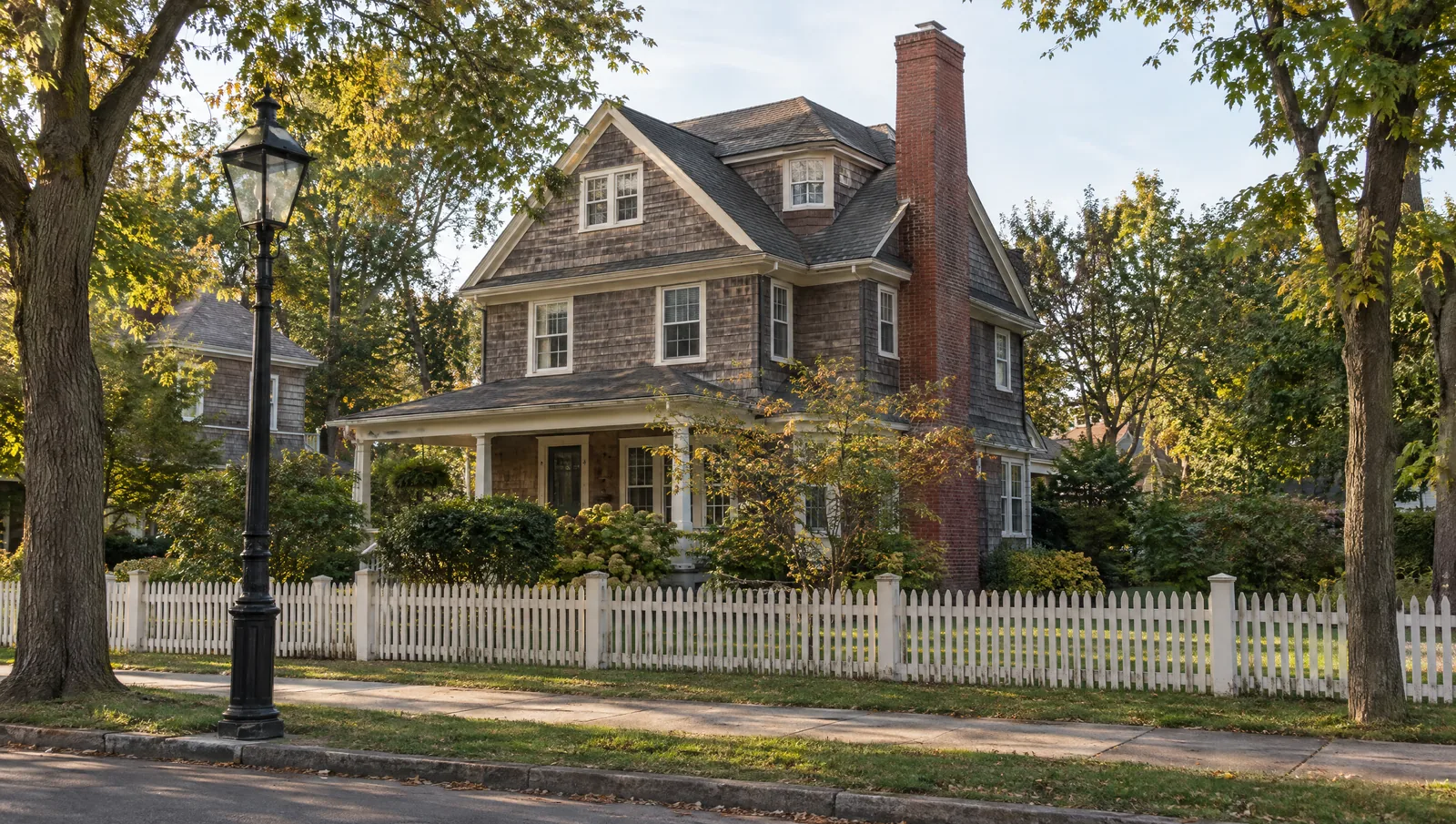
Glen Ridge is one of those places where most of the houses are older than anyone living in them. The borough split off from Bloomfield Township in 1895, and its gas street lamps still light the sidewalks much as they did when many of these homes were new. Census estimates for 2020 to 2024 put roughly four out of five Glen Ridge homes in the "built 1939 or earlier" group. That age is a big part of the town's appeal, and it shapes how the chimneys on these houses should be looked after.
What chimneys from this era are like
Houses from the late 1800s and early 1900s were built around fireplaces and coal or wood heat. Glen Ridge's mix of Queen Anne, Shingle Style, Georgian and Prairie houses shows it. Many have tall chimneys, stacks holding two or three flues side by side, and decorative brickwork such as corbelled tops that step outward near the cap.
Those details are handsome, and they come with a few habits worth knowing about:
- Soft mortar. Brick of this age was usually laid in lime-rich mortar that is softer than modern mixes. It is meant to wear before the brick does, which is why old joints need repointing every few decades.
- Older flue linings. Many flues from this period have clay tile liners, and some of the oldest have no liner at all, only the inside face of the brick.
- Flues that changed jobs. A flue built for a coal stove may now carry exhaust from a gas furnace or water heater, which is a very different load.
- Corbels and ledges. The decorative steps near the top catch rain and snow, so they are often the first brick to wear.
Gas heat in a flue built for coal
Census figures show that most Glen Ridge households heat with utility gas, and a smaller share still burn fuel oil. When a modern gas appliance vents into a large old masonry flue, its exhaust can cool before reaching the top. The water vapor in it condenses inside the chimney, and over time that moisture works on soft mortar and old tile from the inside. Damp patches on the chimney in the attic, white crust at the cleanout, or mortar crumbling inside the flue are the usual signs. A stainless steel liner sized to the appliance is the standard fix, and it leaves the outside brick exactly as it was.
Working within the historic district
Glen Ridge has a long habit of protecting its streets. The borough adopted what is described as New Jersey's first zoning ordinance in 1924, and the Glen Ridge Historic District was listed on the National Register of Historic Places in 1982. According to the borough, the district now covers more than 90 percent of Glen Ridge. The Historic Preservation Commission, set up in 1987, issues a Certificate of Appropriateness before exterior work begins on a property in the district. A few points from the borough's own guidance matter to chimney owners:
- Roofing is one of the minor alterations handled through an expedited application.
- Replacing a roof in kind, such as asphalt shingle for asphalt shingle, does not need the commission's approval.
- The borough now lists previously unpainted masonry among the items the commission looks at, so painting or coating a bare brick chimney is something to ask about first.
Rules change and every project is different, so check with the borough before work that would change how a chimney looks. Taking a chimney down, changing its height, adding a new crown profile or switching to a different brick are the kinds of changes to raise early. Repointing with matching mortar and replacing damaged brick with similar brick keeps a repair as close to the original as possible.
A care routine that suits these houses
- Inspect every year. An annual look at the flue, the crown and the brick catches small problems while the original materials can still be saved.
- Sweep based on use. A fireplace that sees regular winter fires needs sweeping more often than one lit a few times a year.
- Watch the top from the sidewalk. Each spring, use binoculars to look for loose brick on a corbelled top, a cracked crown or a rusted cap.
- Repoint with the right mortar. A hard modern mortar in soft old brick can make the brick faces crack. Ask what mortar will be used before work starts.
- Keep a cap on every working flue. A cap keeps rain and animals out of flues that are already many decades old.
- Know what vents where. In a house with several flues, keep track of which appliance uses which one, especially after a furnace or water heater is replaced.
Keeping the character, and the chimney
On a house of this age, the chimney is part of the streetscape as much as the gas lamps are. Good care keeps it working without changing what it looks like: sound mortar, a crown that sheds water, a liner that suits today's heating, and repairs that match the original brick. Our page on chimney sweep service in Glen Ridge covers sweeping, inspections and repairs for these homes.
Own an older Glen Ridge home?
We will look at the flue, the mortar and the top of the chimney and tell you what it needs. The estimate is free.
Chimney sweep in Glen Ridge Get a Free EstimateMore reading: what spalling brick means · signs of a failing liner