
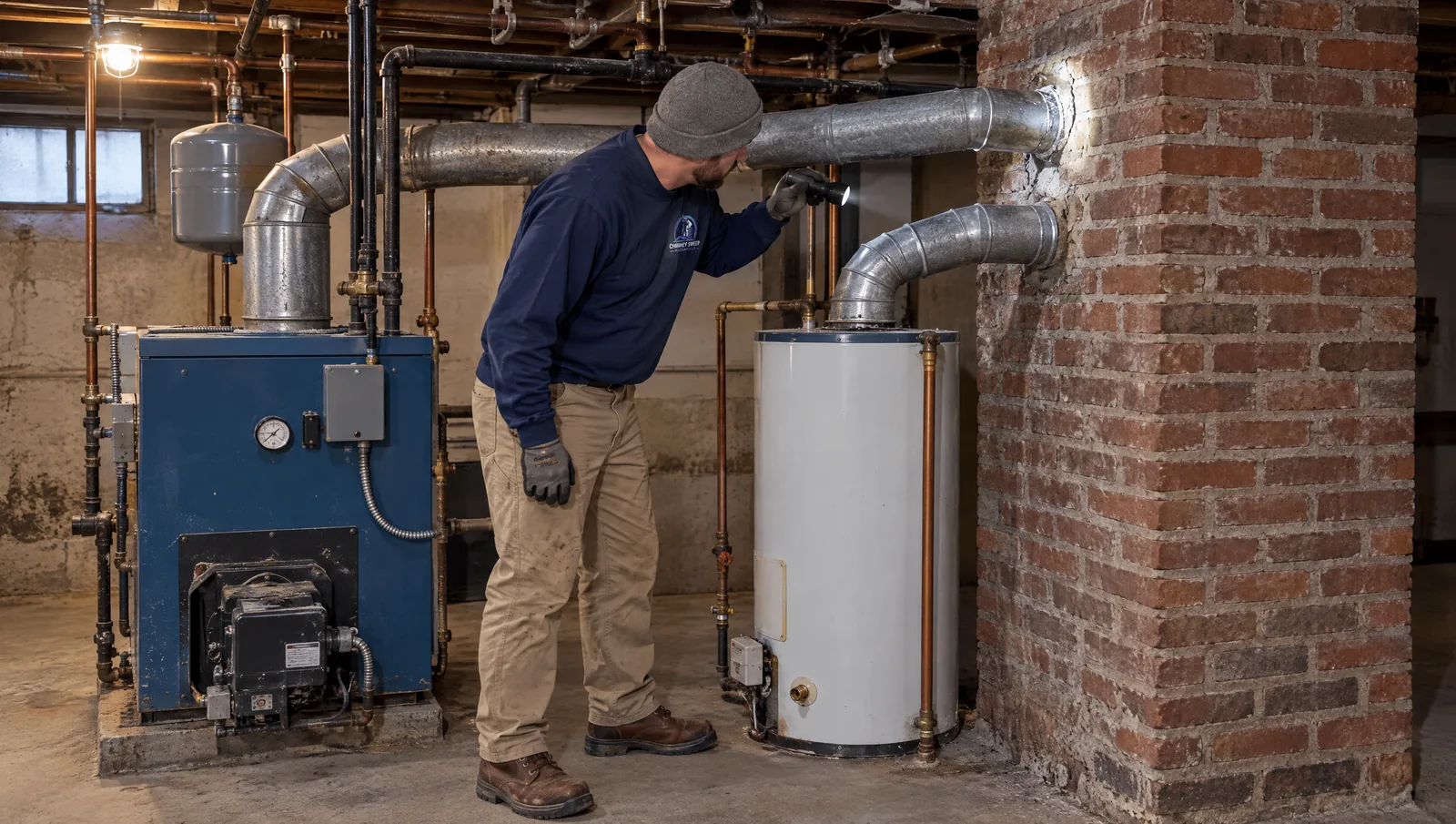
In a two-family or small apartment house, one chimney often does the work for several households. Each unit may have its own furnace or boiler and its own water heater, and the exhaust from all of them can end up in the same masonry stack. When the flues are the right size and in good repair, that arrangement works. When one appliance is changed, or a liner breaks down, the trouble can show up in a different apartment from the one where the work was done. That is the key thing to understand about shared venting.
Why this matters in East Orange
East Orange is one of the most tightly built places in New Jersey. Its 2020 population density of about 17,700 people per square mile ranked it 13th among the state's 565 municipalities. Census estimates for 2020 to 2024 show that only about one home in five is a detached single-family house. Roughly 14 percent of homes are in two-unit buildings and about 13 percent in buildings with three or four units, and close to 70 percent of households rent. About a third of the city's housing was built in 1939 or earlier.
Put together, that means many older chimneys serving more than one household, often with an owner who lives elsewhere and tenants who never see the roof or the basement.
How a shared chimney is usually set up
There are two common arrangements, and plenty of buildings have some of each:
- Separate flues in one stack. The chimney holds two or more flues side by side, each serving one unit's appliances. From the street it looks like one chimney, but it is really several.
- Common venting. Two gas appliances, often a furnace and a water heater, join through a connector and share one flue. Gas codes allow this only when the flue and connectors are sized for the combined load.
A fireplace is a separate case. A flue serving a wood-burning fireplace should not also carry the vent from a gas furnace or water heater. Where an old fireplace flue was later put to work for a heating appliance, that needs to be corrected.
When one unit changes its equipment
Utility gas heats most East Orange homes, and nearly a third use electric heat. Switching between the two, or upgrading to equipment that vents a different way, is common. That is where shared flues get into trouble.
Picture a two-family house where both furnaces and both water heaters once vented into the chimney. The upstairs owner or landlord installs a high-efficiency furnace that vents out the side wall through plastic pipe. Downstairs nothing changes. On paper, the chimney has less to do. In practice, the flue that was sized for more exhaust is now too big for what is left. The gases move slower, cool off and condense inside the masonry. The draft weakens, especially on mild days, and exhaust can spill out at the draft hood of a water heater that is still connected.
The answer is to resize the venting for what actually remains, usually with a stainless steel liner matched to the appliances still using that flue. Our chimney liner replacement page explains how liners are sized and fitted.
Warning signs in any of the units
- a carbon monoxide alarm that sounds, even briefly
- soot or scorch marks around the top of a water heater
- a sharp or sour smell in the utility room while the heat is running
- heavy moisture on windows or walls near the appliances
- rust, white crust or standing water at the chimney cleanout in the basement
- bits of tile or mortar piling up at the base of a flue
If a carbon monoxide alarm goes off, everyone should leave the building and call 911 or the gas utility from outside. The other signs mean the venting should be checked before the next cold snap.
Owners, tenants and the alarm certificate
New Jersey's fire code requires the owner of a one- or two-family house to get a certificate of smoke alarm and carbon monoxide alarm compliance before the home is sold or leased, or changes occupancy. A carbon monoxide alarm is required wherever the building has a fuel-burning appliance or an attached garage. With so many East Orange homes rented, that certificate comes up every time a unit turns over.
The certificate confirms the alarms work. It does not look at the chimney. An alarm warns you once exhaust is already in the apartment, while sound venting keeps it from getting there. For owners of shared-chimney buildings, a few habits help:
- Keep a simple record of which appliance vents into which flue, and update it whenever equipment changes.
- Have the venting checked any time a furnace, boiler or water heater in any unit is replaced or converted.
- Book a yearly inspection that covers every flue, not only the one serving your own unit.
- Ask tenants to report alarms, smells or soot right away.
Looking at the whole chimney
Because one stack serves several households, the inspection should cover all of it: every flue, every connector and the cleanout at the bottom. Our East Orange chimney sweep page explains how we handle inspections and sweeping for homes across the city.
Own a two-family house?
We will check every flue in the chimney, not just one, and price any liner work. The estimate is free.
Chimney sweep in East Orange Get a Free EstimateMore reading: signs of a failing liner · when a Level 2 inspection is needed